,

Top Entry Mixers

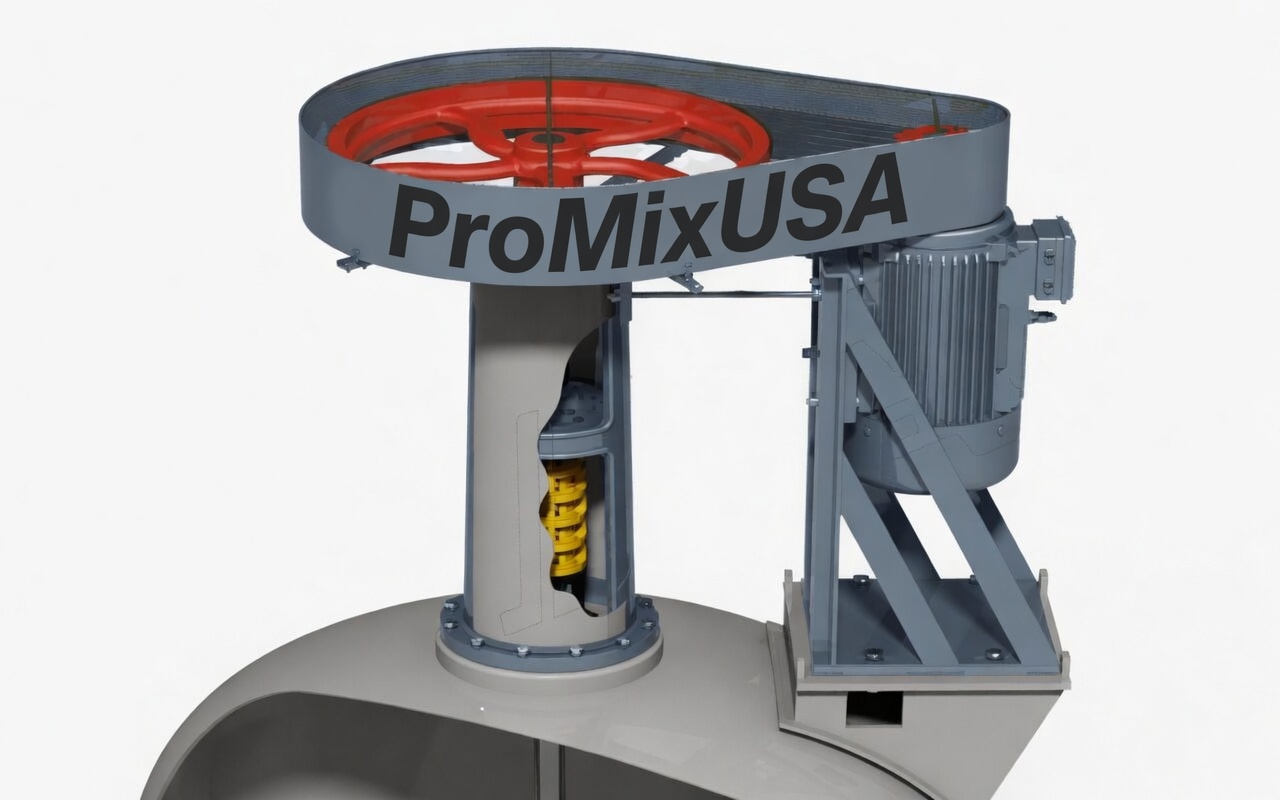
Top Entry Mixers are the most common and versatile type of industrial agitator.
They are mounted vertically from the top of a tank or vessel, with the motor and gearbox positioned above the liquid level.

What Are Top Entry Mixers?

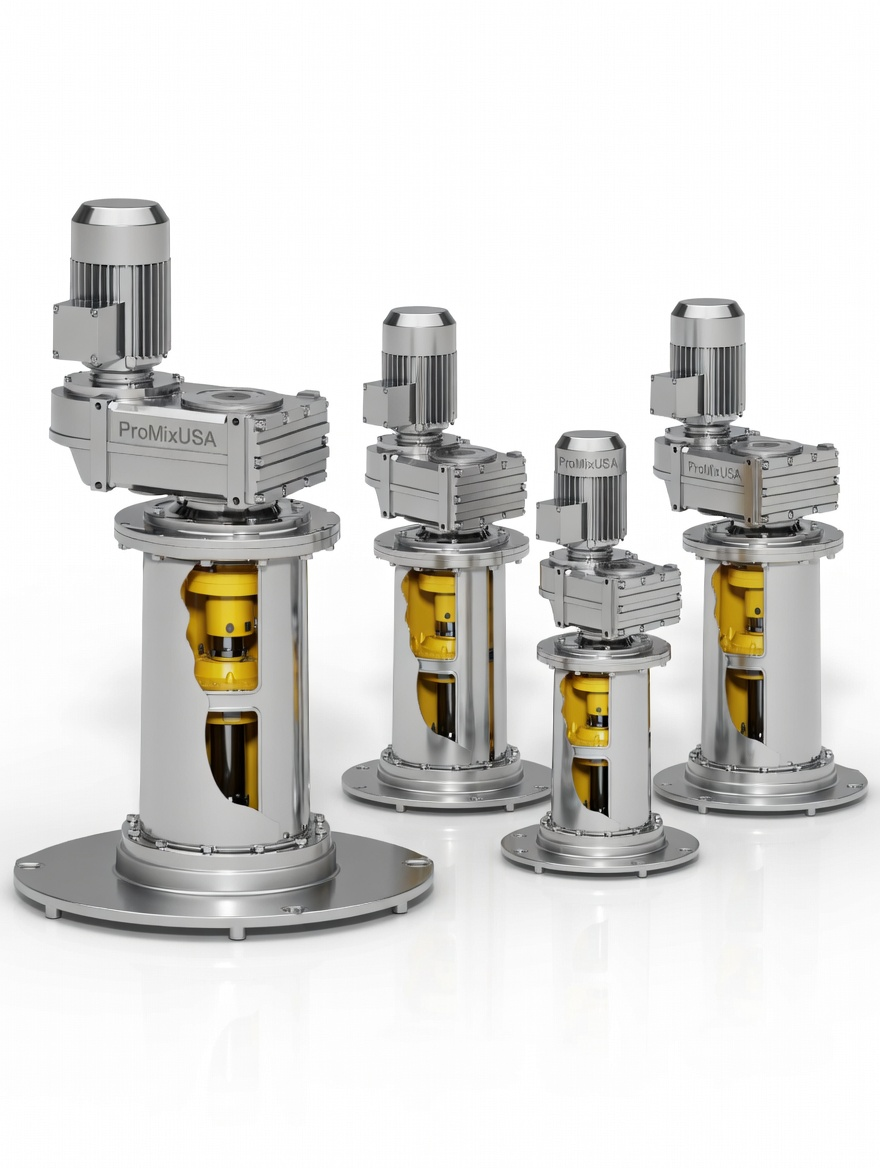
These mixers consist of a drive assembly, a shaft extending downward into the tank, and one or more impellers that generate strong flow patterns.
They effectively blend liquids, suspend solids, disperse gases, and promote heat transfer in tanks ranging from a few hundred gallons to over one million gallons.

Available with various impeller types (hydrofoil, pitched blade, Rushton, anchor, etc.), they can be customized for low to high viscosity fluids and gentle to high-shear mixing requirements.

Key Benefits

Versatile Suitable for almost any tank size and process condition.
Easy Maintenance Drive and seal are located outside the tank for convenient access.
Flexible Impeller Options Hydrofoil, pitched blade, Rushton, anchor and more for precise flow control.
Proven Reliability Decades of successful use across chemical, water treatment, food, pharmaceutical, and petrochemical industries.

Top Entry Mixers are the workhorse of industrial mixing, offering excellent performance, accessibility, and customization for a wide variety of applications.

Top Entry Mixers are the most common and versatile type of industrial agitator. They are mounted vertically from the top of a tank or vessel, with the shaft and impeller extending downward into the liquid.
They are widely used for blending, suspending solids, dispersing gases, and promoting heat transfer in a broad range of tank sizes and process conditions.

What Are Top Entry Mixers?

A Top Entry Mixer consists of a drive assembly (motor and gearbox), a sealed shaft that passes through the tank roof or mounting flange, and one or more impellers positioned at strategic depths within the tank.
The impeller generates strong axial and/or radial flow patterns that circulate the entire tank contents, ensuring uniform mixing, temperature distribution, and solids suspension.

They are available in a wide variety of configurations — from small portable clamp-on mixers to large heavy-duty fixed units with multiple impellers — and can be customized with different impeller types (hydrofoil, pitched blade, Rushton turbine, anchor, etc.) depending on the application.

Key Benefits

Versatile Application Range Suitable for tanks from 100 gallons to over 1,000,000 gallons and viscosities from water-like to several thousand centipoise.
Excellent Flow Control Impeller selection allows precise control over flow pattern (axial for blending/suspension or radial for high shear dispersion).
Easy Maintenance Access The drive and seal are located outside the tank, making routine maintenance much easier than side-entry designs.
Wide Material Options Available in 316L stainless steel, carbon steel with coatings, Hastelloy, and other alloys for full chemical compatibility.
Proven Reliability Decades of proven performance in continuous industrial service with proper design and maintenance.

Common Impeller Types and Their Uses

  • Hydrofoil Impellers – High-efficiency axial flow for blending and solids suspension with low power consumption.
  • Pitched Blade Turbines – Good balance of axial and radial flow for general-purpose mixing.
  • Rushton Turbines – High-shear radial flow for gas dispersion and emulsification.
  • Anchor Impellers – Used for very high-viscosity fluids and scraping tank walls.
  • Propellers – Simple, cost-effective for low-viscosity blending in smaller tanks.

Common Industries and Applications

  • Chemical Processing – Blending reactants, pH adjustment, catalyst dispersion
  • Water & Wastewater Treatment – Flocculation, equalization, chemical dosing, sludge suspension
  • Pharmaceutical & Biotech – Buffer preparation, fermentation, API synthesis (sanitary designs)
  • Food & Beverage – Syrup blending, juice mixing, dairy processing, sauce emulsification
  • Oil & Gas / Petrochemical – Crude oil blending, fuel oil treatment, additive mixing
  • Pulp & Paper – Stock chest agitation, coating preparation, broke chests
  • Power Generation – Limestone slurry mixing in FGD systems, cooling water treatment

Top Entry Mixers remain the workhorse of industrial agitation due to their flexibility, accessibility for maintenance, and ability to handle a vast range of tank sizes and fluid properties.
When properly sized and equipped with the right impeller and seal, they deliver reliable, long-term performance across almost every process industry.
Specifications

Top Entry Mixers are the most widely used industrial agitators, mounted vertically through the top of a tank or vessel.
They are engineered for a vast range of tank sizes, viscosities, and process conditions, delivering reliable blending, solids suspension, gas dispersion, and heat transfer.
Their modular design allows full customization of power, impeller type, shaft length, sealing system, and materials to meet exact process requirements.

Detailed Specifications – Top Entry Mixers

Parameter Specification Notes
Mounting Type Top Entry – Fixed pedestal, beam-mounted, or clamp-on portable models Most common industrial agitator configuration
Tank Capacity Range 100 gallons to over 1,000,000 gallons (380 L to 3,785 m³) From small pilot tanks to massive storage vessels
Power Range 0.25 HP to 250 HP (0.18 kW to 186 kW) Higher power available on custom engineered units
Speed Range Fixed speed 30 – 1750 RPM or variable via VFD (5 – 300 RPM typical for large tanks) Lower speeds for high-viscosity or large-diameter tanks
Impeller Types Hydrofoil (high-efficiency axial), Pitched Blade Turbine, Rushton Turbine, Anchor, Propeller, High-Shear Sawtooth, and custom designs Impeller selected based on flow pattern and shear requirements
Number of Impellers 1 to 4 impellers per shaft (multiple levels for tall tanks) Multiple impellers used for deep tanks or multi-zone mixing
Shaft Material & Diameter 316L Stainless Steel, Carbon Steel with coatings, Hastelloy, Duplex, Titanium
Diameter: 1″ to 8″ (25 mm to 200 mm)
Shaft sized for critical speed and deflection limits
Shaft Length Up to 50 ft (15 m) or longer with steady bearings Steady bearings or bottom supports used for very long shafts
Wetted Parts Materials 316L Stainless Steel, 304 Stainless Steel, Hastelloy C-276, Duplex Stainless, Titanium, or coated carbon steel Full material traceability and certification available
Sealing Options Stuffing box, Single mechanical seal, Double mechanical seal with barrier fluid, Magnetic drive (sealless), Vapor-tight lip seal Sealless magnetic drive available for hazardous or ultra-pure applications
Gearbox Type Helical, worm, or planetary gear reducer with heavy-duty bearings Oil-lubricated or grease-lubricated options
Motor Type TEFC, Explosion-proof (Class I Div 1/2), IEEE-841 severe duty, VFD-rated, or washdown ATEX/IECEx certified motors available for hazardous areas
Pressure Rating (Vapor Space) Full vacuum to 50 PSI (3.4 bar) standard; higher pressures available with reinforced mounting Sealed designs for pressurized or inerted tanks
Temperature Rating -50°F to 500°F (-46°C to 260°C) standard; higher with special seals and materials Limited by seal and lubricant selection
Viscosity Range 1 cP to 100,000+ cP (with proper impeller and gearbox selection) Higher viscosities require larger power and special impellers
Standards Compliance ASME, API, ATEX, CE, 3-A (sanitary models), GMP, FDA-compliant materials available Full material certification and documentation packages available
Options & Accessories VFD speed control, tachometer, steady bearings, lantern rings, flush ports, shaft guard, lift lugs, explosion-proof controls Fully customized to meet specific plant safety and process requirements

Top Entry Mixers are highly engineered, application-specific solutions. Every unit is sized according to tank geometry, fluid properties (density, viscosity, specific gravity), required mixing intensity, and heat/mass transfer needs.
Proper selection of impeller type, power, shaft design, and sealing system ensures long-term reliability and energy-efficient operation across the broadest range of industrial mixing applications.

Power vs. Viscosity

Power Requirement vs. Viscosity

Portable Tank Mixers (1 HP – 5 HP Models)
Typical Applications: Drums, IBC Totes & Small Tanks

Typical Power Consumption Curve – Portable Tank Mixers

Viscosity (cP)     |   Power Required (HP)
─────────────────────────────────────────────
1             |    0.5  (Direct Drive – Low Viscosity)
10             |    0.8
100             |    1.2
1000             |    2.0  ← Typical Design Point
5000             |    3.5  (Gear Drive Recommended)
10000            |    5.0  (Max for most 5 HP models)
20000+            |    Requires larger model or slower speed

Power demand increases significantly with viscosity.
Direct-drive models are efficient for low viscosity; gear-driven models provide higher torque for thicker fluids.

Key Notes on Power vs. Viscosity

  • Low Viscosity (< 100 cP): Direct-drive motors with propeller or hydrofoil impellers use the least power.
  • Medium Viscosity (100 – 5,000 cP): Gear-reduced models are preferred for better torque and mixing performance.
  • High Viscosity (> 5,000 cP): Requires higher horsepower or slower speeds with anchor-style impellers.
  • Variable Frequency Drives (VFDs) are highly recommended to optimize power usage across different batch viscosities.
  • Pneumatic (air-powered) models are often chosen in hazardous areas or where electric power is limited.

Portable Tank Mixers must be properly sized for the expected viscosity range.
Undersized mixers will fail to achieve adequate mixing, while oversized units waste energy and increase operating costs.

For accurate power calculations based on your exact container size, fluid properties, impeller type, and mixing goals, consult the manufacturer for a custom engineering recommendation.

Installation Procedures

Proper installation of Top Entry Mixers is critical for safe operation, vibration-free performance, and long equipment life.
These mixers are mounted on the top of the tank and must be securely supported to handle dynamic loads from the rotating shaft and impeller.

Installation Procedures for Top Entry Mixers

Step Installation Procedure Tools / Materials Required Safety & Important Notes
1 Review the mixer orientation, impeller type, and shaft length. Confirm the tank nozzle or mounting flange matches the mixer’s bolt pattern and rating. Installation drawings and manual Incorrect orientation or impeller positioning can cause poor mixing or mechanical stress.
2 Ensure the tank is empty, isolated, depressurized, and locked out/tagged out (LOTO). Verify that the tank roof or support structure can safely support the weight and dynamic loads of the mixer. Lockout/Tagout kit Never install while the tank contains hazardous materials or is under pressure.
3 Use a crane or hoist to carefully lift and position the mixer assembly over the tank nozzle. Align the flange bolt holes precisely. Certified lifting equipment, alignment tools Use proper lifting points. Heavy mixers require careful rigging to avoid damage.
4 Install new compatible gaskets and tighten flange bolts in a criss-cross pattern to the manufacturer’s recommended torque values. New gaskets, calibrated torque wrench Follow proper torquing sequence to prevent flange distortion or gasket failure.
5 Install adequate structural supports, bracing, and vibration dampeners around the mixer mounting. Ensure the shaft has proper clearance inside the tank. Structural supports, shims, vibration pads Top entry mixers generate significant dynamic loads — proper support is essential to prevent fatigue and vibration.
6 For mixers with mechanical seals or stuffing boxes, verify seal alignment and install any required seal flush or quench lines. Seal flush piping (if applicable) Proper seal setup prevents leakage and extends seal life.
7 Gradually fill the tank with process fluid. Start the mixer at low speed (if VFD equipped) and monitor for vibration, noise, leaks, and unusual power draw. Gradually increase to operating speed. VFD controller, vibration meter Carefully observe during initial startup to catch any installation issues early.
8 Document the installation: torque values, alignment readings, baseline vibration and amperage, serial number, and startup observations. Update the equipment maintenance log. Checklist, photos, torque logs Good documentation supports warranty claims and future maintenance planning.

Important Notes for Top Entry Mixers:

• The tank roof or support structure must be strong enough to handle both the static weight and dynamic loads of the mixer.
• Proper shaft alignment and impeller clearance are critical for smooth, vibration-free operation.
• Use a Variable Frequency Drive (VFD) whenever possible to allow soft starting and speed adjustment.
• For large or heavy mixers, professional rigging and alignment services are strongly recommended.
• Always follow the manufacturer’s specific torque values and installation manual for your model.

Correct installation ensures safe, efficient, and reliable long-term performance of your top entry mixer.

Maintenance Procedures

Top Entry Mixers are robust systems, but they require regular maintenance to ensure reliable performance, prevent vibration issues, and extend the life of the motor, gearbox, shaft, seals, and impeller.

Maintenance Procedures for Top Entry Mixers

Maintenance Task Procedure & Frequency
Daily / Visual Inspection • Check for unusual noise, vibration, or leaks around the seal or mounting flange
• Monitor motor temperature and current draw
• Look for any signs of oil leaks from the gearbox
Weekly • Inspect mounting bolts and foundation for tightness
• Check shaft for excessive runout or vibration
• Clean external surfaces and motor cooling fins
Monthly / Quarterly • Measure and record vibration levels at the motor and gearbox
• Check gearbox oil level and condition
• Inspect mechanical seal or stuffing box for leakage
• Verify impeller clearance and condition (if tank access allows)
Semi-Annual • Change gearbox oil (or per manufacturer interval)
• Re-torque all mounting and foundation bolts
• Inspect coupling alignment and condition
• Check and clean or replace air filters on motor (if applicable)
Annual Major Service • Full inspection of motor bearings and windings
• Replace mechanical seals or packing as needed
• Inspect shaft, keyways, and impeller for wear or corrosion
• Perform non-destructive testing (NDT) on critical welds if in corrosive service
During Tank Shutdown (Every 1–3 Years) • Remove mixer for thorough inspection and overhaul
• Clean or replace impeller and shaft if necessary
• Rebuild gearbox and replace bearings if required
• Perform alignment check before reinstallation

Important Notes for Top Entry Mixers:

• Monitor vibration levels regularly — excessive vibration is the leading indicator of misalignment, bearing wear, or impeller damage.
• Gearbox oil changes are critical — follow the manufacturer’s recommended interval based on operating hours and temperature.
• Mechanical seals require periodic inspection and eventual replacement. Early detection of leaks prevents costly downtime.
• Always use manufacturer-approved lubricants and spare parts.
• Schedule major maintenance during planned tank shutdowns to minimize production impact.

Consistent maintenance will maximize the reliability and service life of your top entry mixer while ensuring safe and efficient operation.

Q&A

Question Answer
What is a Top Entry Mixer? A Top Entry Mixer is an industrial agitator mounted vertically from the top of a tank or vessel. The motor and gearbox sit above the tank, with a shaft extending downward into the liquid and one or more impellers generating flow to blend, suspend solids, disperse gases, or promote heat transfer.
Why are Top Entry Mixers the most common type of industrial mixer? They offer excellent accessibility for maintenance, can handle a very wide range of tank sizes and viscosities, allow easy impeller changes, and provide superior flow control. The drive system is outside the tank, making seals and bearings easier to service compared to side-entry designs.
What are the main types of impellers used in Top Entry Mixers? Hydrofoil – High-efficiency axial flow for blending and solids suspension with low power use.
Pitched Blade Turbine – Balanced axial and radial flow for general mixing.
Rushton Turbine – High-shear radial flow for gas dispersion and emulsification.
Anchor – For high-viscosity fluids and wall scraping.
Propeller – Simple and cost-effective for low-viscosity fluids in smaller tanks.
What tank sizes can Top Entry Mixers handle? They are extremely versatile and can be used in tanks from as small as 50–100 gallons up to massive vessels exceeding 1,000,000 gallons. Multiple impellers on a single shaft are commonly used in tall tanks for uniform mixing throughout the entire volume.
What sealing options are available for Top Entry Mixers? Common options include single mechanical seals, double mechanical seals with barrier fluid, stuffing boxes, vapor-tight lip seals, and sealless magnetic drives for hazardous or ultra-pure applications.
When should you choose a Top Entry Mixer over a Side Entry Mixer? Choose Top Entry when: the tank roof has sufficient structural support, maintenance access from the top is preferred, the tank is not extremely large (over ~500,000 gallons where side entry becomes more economical), or when multiple mixing zones are needed with several impellers on one shaft.
What is the typical power range for Top Entry Mixers? Power ranges from 0.25 HP for small portable mixers up to 250 HP or more for very large tanks. Most industrial applications fall between 1 HP and 75 HP.
Can Top Entry Mixers handle high-viscosity fluids? Yes. With the correct impeller (such as anchor or helical ribbon) and sufficient power/gear reduction, they can effectively mix fluids up to 100,000+ centipoise.
What materials are commonly used for wetted parts? 316L Stainless Steel is the most common. Other options include 304 Stainless Steel, carbon steel with coatings, Hastelloy, Duplex Stainless Steel, and Titanium for highly corrosive environments.
Are Top Entry Mixers suitable for hazardous or explosive environments? Yes. They can be supplied with explosion-proof motors (Class I Div 1 or Div 2), ATEX/IECEx certification, and special sealing systems for flammable or hazardous atmospheres.

Note: Top Entry Mixers are highly engineered solutions. Proper selection of power, impeller type, shaft design, and sealing system is critical for achieving the desired mixing result while maintaining energy efficiency and long-term reliability.
Always provide detailed process data (tank dimensions, fluid properties, viscosity, specific gravity, and mixing objective) to the manufacturer for accurate sizing and recommendation.

Advantages / Disadvantages

Advantages Disadvantages
  • Most versatile agitator type – suitable for almost any tank size and process
  • Excellent maintenance access since the drive and seal are outside the tank
  • Wide range of impeller options for precise control of flow pattern and shear
  • Can handle very large tanks with multiple impellers on a single shaft
  • Easy to customize power, speed, shaft length, and materials
  • Proven long-term reliability across decades of industrial use
  • Lower risk of seal failure compared to side-entry mixers (less hydraulic pressure on the seal)
  • Supports a broad viscosity range from water-like to over 100,000 cP
  • Requires strong structural support on the tank roof or bridge
  • Long shafts in deep tanks can experience deflection or critical speed issues
  • Higher initial cost for very large tanks compared to side-entry designs
  • More difficult to access the impeller for inspection without draining the tank
  • Can create vortexing if baffles are not properly designed or installed
  • Heavy drive assembly may require crane support during installation and maintenance
  • Not ideal for extremely large storage tanks (over ~500,000 gallons) where side-entry becomes more economical

Note: Top Entry Mixers are the workhorse of industrial agitation due to their unmatched versatility and accessibility.
While they require proper tank roof support and careful shaft design in deep tanks, their flexibility in impeller selection and ease of maintenance make them the preferred choice for the majority of mixing applications across chemical, water treatment, food, pharmaceutical, and petrochemical industries.

Applications

Top Entry Mixers are the most versatile and widely used industrial agitators. Their ability to handle a vast range of tank sizes, viscosities, and process objectives makes them indispensable across nearly every process industry.

Applications of Top Entry Mixers

Industry / Sector Specific Applications Purpose & Key Benefits
Water & Wastewater Treatment Equalization tanks, flocculation basins, coagulation, chemical dosing (alum, ferric, polymer), pH adjustment, sludge holding tanks, aerobic digesters Uniform chemical distribution, solids suspension, and consistent treatment performance while meeting strict regulatory standards.
Chemical Processing Reactor blending, pH control, catalyst dispersion, exothermic reaction control, batch mixing, intermediate storage, neutralization tanks Precise control of mixing intensity and shear to ensure consistent product quality and reaction efficiency.
Petrochemical & Refining Crude oil blending, fuel oil homogenization, additive injection, desalter operations, storage tank mixing Prevents stratification in large storage tanks and ensures uniform product specifications.
Pharmaceutical & Biotech Buffer preparation, media mixing, fermentation tanks, API synthesis, vaccine production, sanitary blending (with CIP capability) Gentle yet thorough mixing while maintaining sterility and regulatory compliance (FDA, GMP, 3-A).
Food & Beverage Syrup blending, juice mixing, dairy standardization, sauce and dressing emulsification, beer wort mixing, chocolate conching Achieves consistent texture and flavor while meeting strict hygiene and sanitary requirements.
Pulp & Paper Stock chests, broke chests, pulp storage towers, coating preparation, bleach mixing Maintains uniform consistency and prevents fiber settling in large-volume chests.
Power Generation Limestone slurry mixing (FGD systems), cooling tower water treatment, boiler feedwater chemical dosing, ash slurry suspension Prevents settling of solids and ensures uniform chemical distribution in critical power plant systems.
Oil & Gas Crude oil blending, condensate stabilization, fuel oil storage, produced water treatment, drilling fluid mixing Maintains homogeneity in large storage tanks and prevents phase separation.
Mining & Mineral Processing Slurry storage, reagent mixing, flotation conditioning, tailings neutralization, leaching tanks Keeps solids in suspension and ensures even distribution of flotation reagents or acids.
Adhesives, Coatings & Inks Pigment dispersion, resin blending, high-shear emulsification, batch adjustment Achieves consistent viscosity and color while preventing settling of solids.

Top Entry Mixers are truly universal agitators. From small pilot-scale pharmaceutical vessels to massive 1,000,000-gallon crude oil storage tanks, they deliver reliable, efficient mixing performance across virtually every process industry.
Their ability to be customized with different impellers, power levels, and sealing systems makes them the first choice for engineers when designing new mixing systems or upgrading existing ones.

Downloads

Drawings

You may also like…