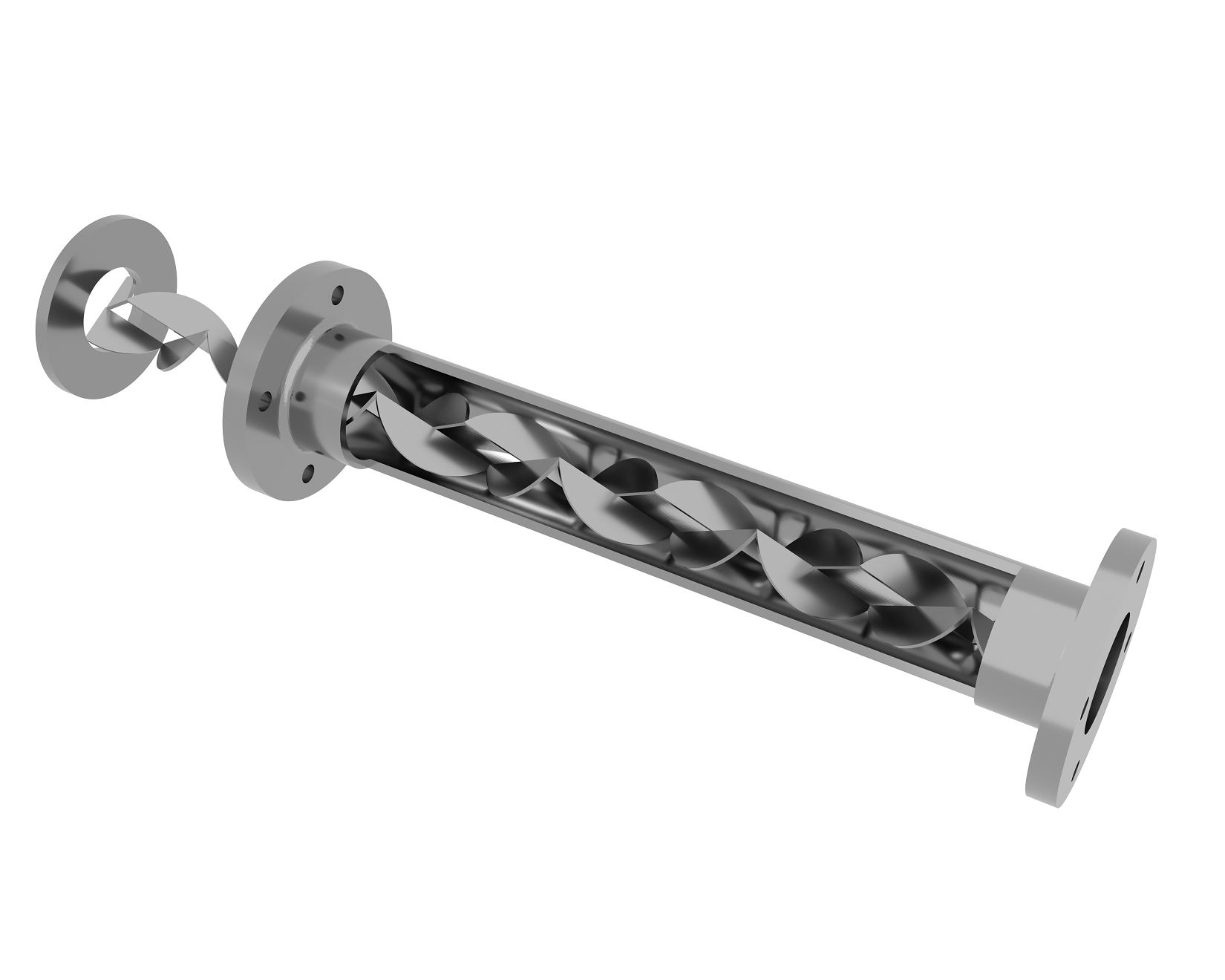
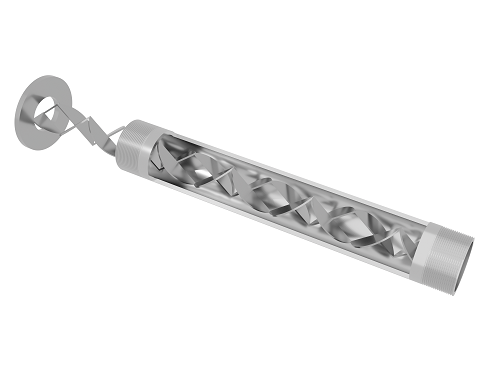
 We specialize in the production of a wide range of custom stainless steel and Metal Alloys Static Mixers, fabricated from industrial-grade pipes with schedules ranging from 10 to 40. These mixers are available in diameters from as small as 1/2″ to as large as 60″. We meticulously design and tailor each stainless-steel static mixer to meet the specific requirements of individual applications. This customization ensures that each mixer delivers optimal performance, regardless of the complexity or demands of the process it serves.
The company maintains an extensive inventory of raw materials for their mixer line, allowing them to respond swiftly to customer needs. For urgent requirements, we can manufacture a flanged industrial mixer within a remarkably short timeframe of 1-2 days. In addition, this rapid turnaround time is a testament to the company’s efficient production processes and commitment to customer satisfaction. The standard materials used in constructing these mixers include carbon steel, as well as 304L and 316L stainless steel, which are known for their excellent corrosion resistance and durability. For applications requiring even greater resistance to corrosive environments or extreme conditions, we also offer mixers made from higher alloy materials, available upon request.
Material Selection and Customization for Metal Alloys Static Mixers
The choice of materials is crucial in the design and manufacture of Metal Alloys Static Mixers. In addition, the standard use of 304L and 316L stainless steel provides a balance of strength, durability, and resistance to corrosion, making these alloys suitable for a wide range of industrial applications, including those involving chemicals, food processing, and pharmaceuticals. The use of carbon steel offers a cost-effective solution for less corrosive environments. For more specialized applications, we can incorporate a Metal Alloys Static Mixers, such as Hastelloy, Inconel, or titanium, which offer superior resistance to specific chemical agents or extreme temperatures. These higher alloys are particularly beneficial in industries such as petrochemicals, aerospace, and marine, where standard materials may not provide sufficient protection or longevity.
Manufacturing Capabilities and Flexibility
One of our key strengths is its ability to quickly produce custom Metal Alloys Static Mixers. This is thanks to its substantial stock of raw materials and efficient manufacturing processes. The ability to fabricate mixers in a range of diameters, from small-scale laboratory setups to large industrial installations. As a result, this allows us to serve a diverse clientele. In addition, whether the need is for a small, precise mixer for a delicate pharmaceutical application or a large, robust mixer for an industrial wastewater treatment plant, we can accommodate these requirements.
We typically supply the Metal Alloys Static Mixers with flanged connections, which make it easy to install and integrate them into existing piping systems. These flanged connections also allow for straightforward disassembly, which is crucial for maintenance and inspection in applications requiring regular cleaning and monitoring. Additionally, we can produce mixers with threaded, welded, or other specialized connection types, depending on the specific requirements of the installation.
Design Considerations and Engineering Expertise
Each static mixer design is developed through a careful analysis of the application’s needs. Factors such as flow rate, viscosity, pressure drop, and mixing intensity are thoroughly evaluated. We employ advanced computational fluid dynamics (CFD) simulations and other engineering tools to optimize the design of the mixing elements, ensuring efficient and homogeneous mixing of fluids. The design process also considers the minimization of pressure drops, which is crucial in maintaining energy efficiency and reducing operational costs.
In applications where the process involves highly viscous fluids or materials that are prone to clogging. To avoid this, we can incorporate specialized designs such as helical elements or custom baffles. In addition, these features enhance the mixing process by creating turbulence and promoting thorough blending, even in challenging conditions. The ability to customize the internal structure of the mixers means that we can provide solutions. Solutions that not only meet but exceed customer expectations in terms of performance and reliability.
Quality Assurance and Testing for Metal Alloys Static Mixers
We adhere to stringent quality assurance protocols throughout the manufacturing process. Each mixer undergoes rigorous inspection and testing to ensure it meets the specified design criteria and industry standards. In addition, this includes dimensional checks, material verification, and pressure testing to confirm the integrity of the welds and connections. Finally, for mixers used in critical applications, such as food processing or pharmaceuticals. Also, additional testing may be conducted to ensure compliance with relevant sanitary standards and regulations.
Customer Support and After-Sales Service
Beyond the initial sale, we offer comprehensive support services, including installation guidance, maintenance training, and troubleshooting assistance. The company understands that the successful operation of a static mixer depends not only on its design and construction. In addition, it is also on proper installation and maintenance. Our technical support team is available to assist customers with any issues that may arise. This ensures that the mixers perform optimally throughout their operational life.
Applications and Industry Solutions for Metal Alloys Static Mixers
A wide array of industries utilizes our Metal Alloys Static Mixers, each facing unique challenges and requirements. In the chemical industry, these mixers blend chemicals to ensure uniformity in product formulations. In addition, in the water treatment sector, they play a crucial role in the homogenization. Moreover, homogenization of chemical dosing and the distribution of flocculants. Finally, the food and beverage industry rely on static mixers for the consistent mixing of ingredients. While pharmaceutical applications often require mixers that can handle highly viscous or sensitive products without contamination.
Conclusion
Our dedication to quality, customization, and rapid production makes it a leader in the field of static mixers. In addition, by offering a range of materials and designs tailored to the specific needs of various industries. This ensures that its products not only meet but often exceed the expectations of its customers. Furthermore, the company’s focus on rapid response and comprehensive customer support further enhances its reputation. Its reputation as a reliable partner in the industrial sector. Finally, whether for standard applications or highly specialized processes. We provide Metal Alloys Static Mixers that deliver consistent performance, durability, and efficiency.
Other Static mixers you may be interested in:
Sanitary Static Mixers
PTFE Static Mixers
PFA Static Mixers
Specifications
- Diameter: 1/2″ – 60″
- Material:
- Standard: Carbon Steel, 304 / 304L SS, 316 / 316L SS
- Higher Alloys: Hastelloy® C-276, Duplex 2205 / 2507, Inconel, Alloy 20, Monel, Titanium
- Pipe Schedule:
- Standard: Schedule 10S, Schedule 40S, Schedule STD
Installation
Installing a static mixer requires careful planning and attention to detail to ensure optimal performance and longevity. Static mixers are devices used to mix fluids in a pipeline without moving parts, relying on the flow energy to achieve mixing. The installation process involves several key steps, including preparation, installation, and post-installation checks. Below is a detailed procedure for installing a static mixer:
Preparation
Select the Installation Location:
- Choose a suitable location in the pipeline where the static mixer can be installed. Ensure there is sufficient space for installation and future maintenance.
- Consider the flow profile and ensure there are sufficient straight pipe lengths upstream and downstream of the mixer to allow for proper mixing. Typically, a length of 5-10 pipe diameters upstream and 3-5 pipe diameters downstream is recommended.
Verify Compatibility:
- Ensure that the static mixer material is compatible with the fluids being processed to avoid corrosion or degradation.
- Check that the mixer size matches the pipeline diameter and the flow rate requirements.
Prepare the Tools and Equipment:
- Gather the necessary tools, such as wrenches, gaskets, flanges, bolts, nuts, and a torque wrench.
- Have the installation manual and technical drawings on hand for reference.
Safety Precautions:
- Ensure the pipeline is depressurized and drained of any fluids.
- Follow all relevant safety protocols, including wearing appropriate personal protective equipment (PPE).
Installation
Prepare the Pipeline:
- Cut the pipeline at the designated installation point, ensuring clean, straight cuts.
- Remove any burrs, debris, or sharp edges from the cut ends to prevent damage to the mixer and ensure a proper seal.
Install the Flanges (if not already present):
- Attach the appropriate flanges to the pipeline ends where the mixer will be installed.
- Ensure the flanges are aligned correctly and securely attached.
Insert the Static Mixer:
- Place the static mixer between the flanges, ensuring the correct orientation as specified by the manufacturer. Some mixers have a preferred flow direction, marked with an arrow.
- Insert gaskets between the flanges and the mixer to ensure a tight seal.
Secure the Mixer:
- Align the mixer and the pipeline flanges, ensuring proper alignment to avoid stress on the pipeline.
- Insert and hand-tighten the bolts and nuts evenly around the flange.
- Using a torque wrench, tighten the bolts in a crisscross pattern to the manufacturer’s specified torque values. This ensures even pressure distribution and prevents leaks.
Post-Installation Checks
Leak Test:
- Once the mixer is securely installed, conduct a leak test by slowly pressurizing the pipeline and inspecting for leaks at the flange connections.
- If any leaks are detected, depressurize the system and retighten the bolts as needed.
Flow Test:
- Gradually introduce the fluid flow to ensure the static mixer operates correctly.
- Observe the mixing performance and verify that the desired mixing level is achieved.
Final Inspection:
- Check that all components are securely installed and that there are no visible signs of damage or misalignment.
- Ensure that the area around the mixer installation is clean and free of debris.
Documentation and Maintenance
Record Keeping:
- Document the installation details, including the location, date, and personnel involved.
- Record any observations during the installation and testing phases, including torque values used for tightening the bolts.
Maintenance Schedule:
- Establish a maintenance schedule based on the manufacturer’s recommendations and the specific application requirements.
- Regularly inspect the mixer and surrounding pipeline for signs of wear, corrosion, or damage.
Operational Guidelines:
- Provide training for personnel on the operation and maintenance of the static mixer.
- Ensure that any operational changes, such as variations in flow rate or fluid composition, are communicated and assessed for their impact on the mixer’s performance.
By following these installation procedures, you can ensure the reliable operation of the static mixer and achieve consistent mixing results. Proper installation is crucial for the longevity and efficiency of the mixer, as well as for maintaining the safety and integrity of the entire process system.
Maintenance
Maintenance Procedure for Static Mixers
Purpose:
This procedure outlines the steps required to maintain static mixers in optimal working condition, ensuring efficient performance, longevity, and safety.
Preparation
Safety Precautions:
- Before starting maintenance, ensure the system is completely shut down, depressurized, and drained of any fluids.
- Lock out and tag out (LOTO) the system to prevent accidental startup.
- Wear appropriate personal protective equipment (PPE) including gloves, goggles, and protective clothing.
Tools and Materials:
- Wrenches and torque wrench
- Cleaning brushes and tools
- Appropriate cleaning solvents (compatible with the fluids used in the system)
- Replacement gaskets and seals
- Inspection tools (flashlight, mirrors, borescope, if necessary)
- Lubricants suitable for the application
Inspection
External Inspection:
- Visually inspect the static mixer and surrounding piping for any signs of leaks, corrosion, or mechanical damage.
- Check for signs of wear or misalignment in the flanges and bolts.
Internal Inspection:
- Remove the static mixer from the pipeline following proper disassembly procedures.
- Inspect the internal mixing elements for any signs of wear, corrosion, or blockage.
- Check for residue buildup on the mixing elements and inside the housing.
- Ensure that all internal surfaces, including the mixing elements and housing, maintain the specified surface finish (e.g., 20 Ra or better for sanitary applications).
Cleaning
Cleaning Process:
- Clean the mixing elements and internal housing thoroughly using appropriate solvents and cleaning tools.
- For sanitary applications, use approved food-grade or pharmaceutical-grade cleaning agents.
- Carefully remove any residue or buildup without damaging the mixing elements or the housing.
Rinse and Dry:
- Rinse all components with clean water or an appropriate solvent to remove any remaining cleaning agent residues.
- Dry all components thoroughly to prevent corrosion.
Component Replacement
Gaskets and Seals:
- Inspect all gaskets and seals for wear, cracks, or deformation.
- Replace gaskets and seals with new ones of the appropriate material and size.
Mixing Elements (if applicable):
- If mixing elements show significant wear or damage, replace them according to the manufacturer’s specifications.
Reassembly and Reinstallation
Reassembly:
- Reassemble the static mixer, ensuring all components are correctly aligned and seated.
- Use a torque wrench to evenly tighten all bolts to the manufacturer’s specified torque values in a crisscross pattern to ensure a proper seal.
Reinstallation:
- Reinstall the static mixer into the pipeline, ensuring proper alignment and orientation.
- Verify that the flow direction marked on the mixer aligns with the actual flow direction in the pipeline.
Final Checks
Leak Test:
- Gradually repressurize the system and check for leaks at all connections and seals.
- If leaks are detected, depressurize the system and retighten the bolts as necessary.
Operational Test:
- Once the system is confirmed to be leak-free, gradually introduce the fluid and check the mixing performance.
- Observe the system for any unusual noises, vibrations, or other signs of improper operation.
Documentation
Maintenance Log:
- Record all maintenance activities, including date, personnel involved, observations, and any components replaced.
- Note any issues encountered and actions taken to resolve them.
Scheduling:
- Update the maintenance schedule based on the findings from the current maintenance session.
- Schedule the next maintenance inspection according to the manufacturer’s recommendations or based on operational experience.
Training and Safety Review
Personnel Training:
- Ensure that all personnel involved in maintenance activities are adequately trained and familiar with the static mixer and safety procedures.
Safety Review:
- Review safety procedures and protocols periodically to ensure compliance and address any new hazards or changes in the system.
Continuous Improvement
Performance Monitoring:
- Monitor the performance of the static mixer continuously, looking for signs of reduced efficiency or increased wear.
- Adjust maintenance frequency and procedures based on observed performance trends.
By adhering to this maintenance procedure, you can ensure that your static mixer operates efficiently, safely, and consistently. Regular maintenance helps prevent unexpected failures, prolongs the lifespan of the equipment, and maintains the quality of the mixing process.
Q&A
Q1: What are metal alloys static mixers, and why are they used?
A1: Metal alloys static mixers are blending devices made from various metal alloys, such as stainless steel, titanium, or Hastelloy, designed for mixing fluids in industrial processes. They are used for their durability, strength, and resistance to high temperatures and harsh chemicals. Metal alloys are chosen for their ability to handle demanding conditions that plastic or less robust materials might not withstand.
Q2: What are the common types of metal alloys used in static mixers?
A2: Common metal alloys used in static mixers include stainless steel (such as 304 and 316 grades), titanium, Hastelloy, and other high-performance alloys. Each alloy offers specific benefits, such as enhanced corrosion resistance, high-temperature stability, or strength, depending on the application.
Q3: What are the advantages of using metal alloys for static mixers?
A3: Metal alloys offer several advantages:
Durability: Metal alloys are highly durable and can withstand harsh operating conditions, including high pressures and temperatures.
Chemical Resistance: Certain alloys, like Hastelloy and titanium, provide excellent resistance to corrosive chemicals and extreme environments.
Strength: Metal alloys have high mechanical strength, which allows them to handle heavy-duty mixing applications.
Temperature Tolerance: Many metal alloys can operate effectively across a wide temperature range, from cryogenic to high-temperature processes.
Long Lifespan: Due to their robustness, metal alloy mixers typically have a longer service life compared to those made from plastics or less durable materials.
Q4: What are the disadvantages of using metal alloys for static mixers?
A4: Disadvantages include:
Cost: Metal alloys, especially high-performance ones like Hastelloy or titanium, can be significantly more expensive than plastics or standard metals.
Weight: Metal alloys are heavier than plastic alternatives, which can impact installation and handling.
Corrosion in Certain Conditions: While many metal alloys are resistant to corrosion, some can still be susceptible to specific chemicals or environments, requiring careful selection of the alloy.
Complex Fabrication: Working with metal alloys can involve more complex fabrication and welding processes, which may increase manufacturing time and costs.
Q5: What industries commonly use metal alloys static mixers?
A5: Metal alloys static mixers are used across various industries, including:
Chemical Processing: For mixing aggressive chemicals and maintaining process integrity.
Oil and Gas: In refining and petrochemical processes where high temperatures and pressures are involved.
Pharmaceuticals: To ensure high purity and durability in sensitive applications.
Food and Beverage: For processes requiring durability and resistance to high temperatures and cleaning agents.
Water Treatment: For handling harsh chemicals used in water and wastewater treatment.
Q6: How do metal alloys static mixers compare to those made from plastics or ceramics?
A6: Metal alloys typically offer superior strength, durability, and temperature resistance compared to plastics and ceramics. They can handle more extreme conditions and are less likely to fail under high pressure or temperature. However, they are generally more expensive and heavier. Plastics are often chosen for their cost-effectiveness and chemical resistance in less demanding conditions, while ceramics might be selected for their hardness and wear resistance in specific applications.
Q7: How are metal alloys static mixers maintained?
A7: Maintenance involves regular inspections to check for signs of wear, corrosion, or damage. Cleaning procedures depend on the specific application and fluid handled. In some cases, high-pressure cleaning or chemical cleaning may be required. Routine maintenance ensures the mixers continue to operate effectively and prolongs their service life.
Q8: Can metal alloys static mixers be customized for specific applications?
A8: Yes, metal alloys static mixers can be customized to meet specific application requirements. Customizations can include varying the size and length of the mixer, the type and arrangement of mixing elements, and the choice of alloy based on the chemical environment and temperature conditions.
Q9: What factors should be considered when selecting a metal alloy for a static mixer?
A9: Factors to consider include the chemical compatibility of the alloy with the fluids being mixed, the temperature and pressure conditions of the process, the mechanical stresses involved, and cost considerations. The specific properties of the alloy, such as corrosion resistance, strength, and thermal stability, should align with the requirements of the application.
Q10: Are there any special considerations for installing metal alloys static mixers?
A10: Installation considerations include ensuring proper alignment and secure mounting to handle the weight of metal alloys. It’s also important to verify that the mixer is compatible with existing piping systems and that any necessary supports or adjustments are made. Proper installation ensures efficient operation and minimizes the risk of damage during use.
In summary, metal alloys static mixers are highly effective in applications requiring durability, chemical resistance, and high-temperature stability. While they come with higher costs and specific handling requirements, their advantages make them a valuable choice for demanding industrial processes.
Advantages / Disadvantages
Advantages
Durability: Metal alloys are highly durable and can withstand extreme operating conditions, including high pressures and temperatures. This durability ensures long-term reliability and reduces the need for frequent replacements.
Chemical Resistance: Many metal alloys, such as stainless steel, Hastelloy, and titanium, offer excellent resistance to a wide range of chemicals, including acids, bases, and solvents. This makes them suitable for aggressive chemical environments where other materials might degrade.
High-Temperature Tolerance: Metal alloys can operate effectively across a wide temperature range, from cryogenic to high-temperature processes. This makes them ideal for applications involving heat or cold that would compromise other materials.
Mechanical Strength: Metal alloys possess high mechanical strength, which allows them to handle significant physical stresses and pressures. This is particularly important in high-pressure applications where strength and structural integrity are critical.
Long Service Life: Due to their robustness, metal alloys typically have a longer service life compared to plastics or other materials. This longevity translates into reduced maintenance and replacement costs over time.
Sanitary and Cleanability: Many metal alloys, especially stainless steel, have smooth surfaces that are easy to clean and sanitize. This is crucial in industries like pharmaceuticals and food processing, where maintaining hygiene is essential.
Customization: Metal alloys static mixers can be tailored to specific applications. Customization options include variations in size, shape, and mixing element configuration, allowing for optimization based on process requirements.
Disadvantages
Higher Initial Cost: The cost of metal alloys, particularly high-performance materials like Hastelloy or titanium, can be significantly higher than that of plastic or standard metal alternatives. This can be a consideration in cost-sensitive applications.
Weight: Metal alloys are generally heavier than plastic counterparts. This increased weight can affect installation and handling, especially in applications where space and weight constraints are important.
Corrosion in Specific Conditions: While many metal alloys are resistant to corrosion, some can still be vulnerable to specific chemicals or environments. Proper alloy selection is necessary to avoid issues in highly specialized or aggressive conditions.
Complex Fabrication: Fabricating and welding metal alloys can be more complex and time-consuming compared to plastics. This complexity can lead to higher manufacturing costs and longer lead times for custom mixers.
Brittleness at Low Temperatures: Some metal alloys, especially those not designed for cryogenic applications, can become brittle at very low temperatures. This brittleness can lead to cracking or failure in extremely cold conditions.
Impact Damage: Despite their strength, metal alloys can be susceptible to damage from high-impact forces or accidental drops. Proper care and handling are required to prevent damage during installation and operation.
Thermal Expansion: Metal alloys can experience thermal expansion and contraction, which may affect the performance and integrity of the mixer in processes with significant temperature fluctuations. Design considerations must account for these thermal effects.
Electrolytic Corrosion: In some cases, metal alloys can suffer from electrolytic corrosion when exposed to electrical currents or when in contact with dissimilar metals in a conductive environment. This requires careful consideration in design and material selection.
Conclusion
Metal alloys static mixers offer significant advantages in terms of durability, chemical resistance, and high-temperature tolerance, making them suitable for demanding industrial applications. However, their higher initial cost, weight, and potential issues with specific conditions should be carefully evaluated when selecting a mixer for a particular application. Balancing these advantages and disadvantages will help ensure the most effective and cost-efficient solution for your mixing needs.
Applications
Metal alloys static mixers are integral in a variety of industrial processes where durability, high temperature tolerance, and chemical resistance are essential. Here are some notable applications:
Chemical Processing
In chemical processing, metal alloys static mixers are employed to blend chemicals, enhance reaction rates, and ensure uniform mixing of reactants. They are ideal for handling aggressive chemicals and high-pressure environments. Common applications include:
Polymerization: Mixing monomers and catalysts for polymer production.
Acid/Base Reactions: Blending strong acids and bases in reactions.
Solvent and Chemical Additives: Uniformly mixing solvents or additives into chemicals.
Oil and Gas Industry
In the oil and gas sector, these mixers facilitate the blending of various hydrocarbon streams and additives. They are used in:
Crude Oil Processing: Mixing of crude oil with additives for improved quality or performance.
Gas Processing: Blending natural gas with other components for enhanced properties.
Refining: Ensuring uniform distribution of catalysts and other substances in refining processes.
Pharmaceutical Manufacturing
Metal alloys static mixers are crucial in pharmaceutical manufacturing for producing consistent and high-quality products. Applications include:
API Mixing: Blending active pharmaceutical ingredients with excipients.
Vaccine Production: Ensuring uniform mixing of vaccine components.
Biological Reagents: Mixing sensitive biological materials and reagents.
Food and Beverage Processing
In the food and beverage industry, these mixers are used for:
Ingredient Blending: Combining flavors, colors, and other ingredients in food products.
Emulsification: Mixing oils and water-based substances to form stable emulsions.
Sanitary Applications: Processing ingredients while maintaining strict hygiene standards.
Water and Wastewater Treatment
In water and wastewater treatment, metal alloys static mixers play a role in:
Chemical Dosing: Mixing chemicals such as coagulants and disinfectants with water or wastewater.
Flocculation: Facilitating the formation and growth of floc particles for water purification.
pH Adjustment: Mixing acids or bases to adjust the pH of treated water.
Environmental Applications
Metal alloys static mixers are used in environmental engineering for:
Soil Remediation: Mixing reagents into contaminated soil for treatment.
Air Pollution Control: Blending substances used to neutralize pollutants in exhaust gases.
Waste Management: Mixing chemicals or additives for waste stabilization or treatment.
Polymer Production
In polymer production, these mixers ensure:
Homogeneous Blending: Mixing polymer resins and additives to produce uniform polymer materials.
Compounding: Combining different polymer components to achieve desired properties.
Electronics Manufacturing
Metal alloys static mixers are utilized in electronics for:
Adhesive Mixing: Combining adhesives used in electronic component assembly.
Coating Production: Mixing coatings and conductive materials for electronic devices.
Hydrocarbon Processing
In hydrocarbon processing, these mixers are applied in:
Petrochemical Production: Mixing various hydrocarbons and additives in the production of petrochemicals.
Fuel Blending: Ensuring uniform blending of different fuel components for consistent quality.
Specialty Chemicals Production
In the production of specialty chemicals, metal alloys static mixers are used for:
Reactive Mixing: Combining highly reactive chemicals safely and efficiently.
Additive Mixing: Ensuring even distribution of additives in specialty chemical formulations.
Aerospace and Defense
In aerospace and defense industries, these mixers are employed for:
Propellant Mixing: Blending propellant components for rockets and missiles.
Fuel Processing: Mixing aviation fuels with additives for improved performance and stability.
Energy Sector
In the energy sector, metal alloys static mixers are used in:
Biofuel Production: Mixing feedstocks and enzymes for biofuel conversion processes.
Energy Storage: Blending materials for energy storage solutions, such as batteries.
Mining and Metallurgy
In mining and metallurgy, these mixers facilitate:
Ore Processing: Mixing chemicals used in ore extraction and processing.
Slurry Mixing: Blending slurry mixtures used in mineral extraction and processing.
Conclusion
Metal alloys static mixers are versatile tools in many industries, offering durability and reliability in handling demanding mixing applications. Their ability to withstand harsh conditions and provide consistent mixing performance makes them essential in processes involving chemicals, high temperatures, and complex fluid properties.
Downloads
Drawings
Only logged in customers who have purchased this product may leave a review.





 We specialize in the production of a wide range of custom stainless steel and Metal Alloys Static Mixers, fabricated from industrial-grade pipes with schedules ranging from 10 to 40. These mixers are available in diameters from as small as 1/2″ to as large as 60″. We meticulously design and tailor each stainless-steel static mixer to meet the specific requirements of individual applications. This customization ensures that each mixer delivers optimal performance, regardless of the complexity or demands of the process it serves.


Reviews
There are no reviews yet.