, ,

Mechanical Shear Mixers

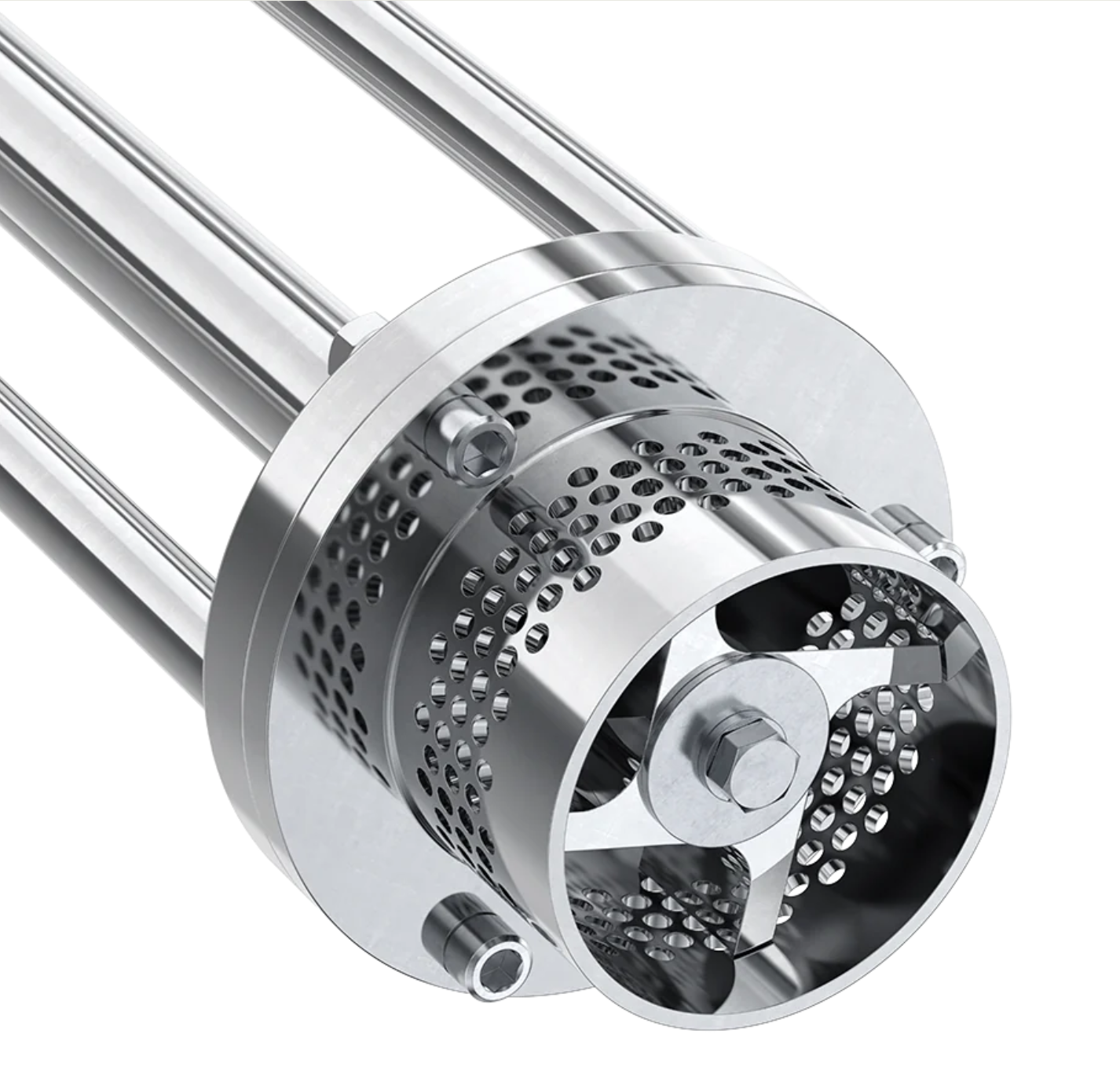
Mechanical Shear Mixers are high-speed rotor-stator devices that generate intense mechanical shear for rapid emulsification, homogenization, dispersion, and particle size reduction.

Key Benefits

High Shear Performance Creates fine emulsions and dispersions quickly.
Versatile Available in batch (tank) and inline (continuous) models.
Fast Processing Reduces mixing time significantly.
Reliable Results Delivers consistent, uniform quality.

Widely used in pharmaceuticals, cosmetics, food, chemicals, paints, and adhesives.

Mechanical Shear Mixers are high-performance rotor-stator mixing systems that utilize intense mechanical shear forces to achieve rapid and efficient emulsification, homogenization, dispersion, and particle size reduction.
Furthermore, they are widely regarded as one of the most effective technologies for creating stable emulsions and uniform dispersions. In addition, these mixers perform exceptionally well across a broad range of viscosities. As a result, they are suitable for numerous industrial applications. Moreover, their versatility allows manufacturers to use them in both batch and continuous processes with consistent, high-quality results.

What Are Mechanical Shear Mixers?

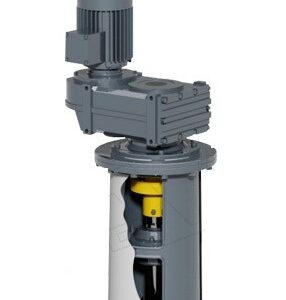
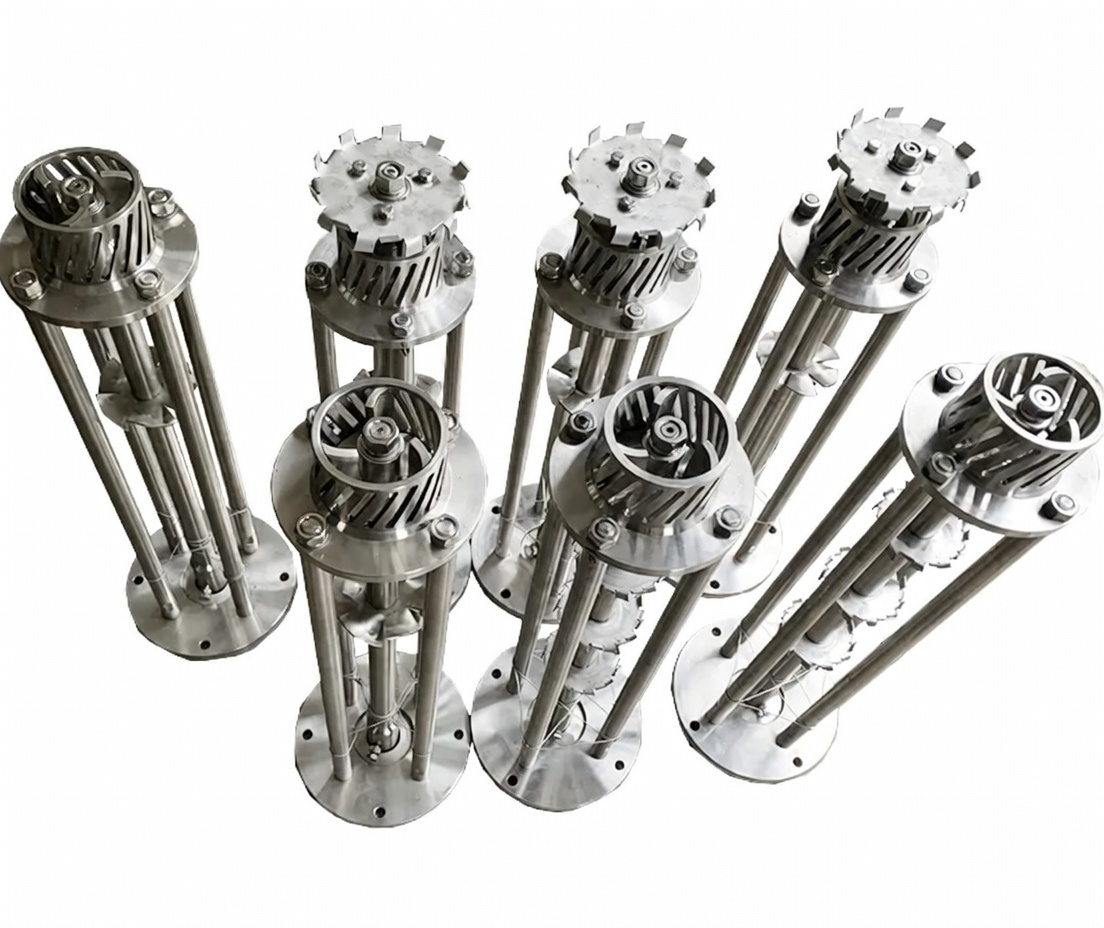
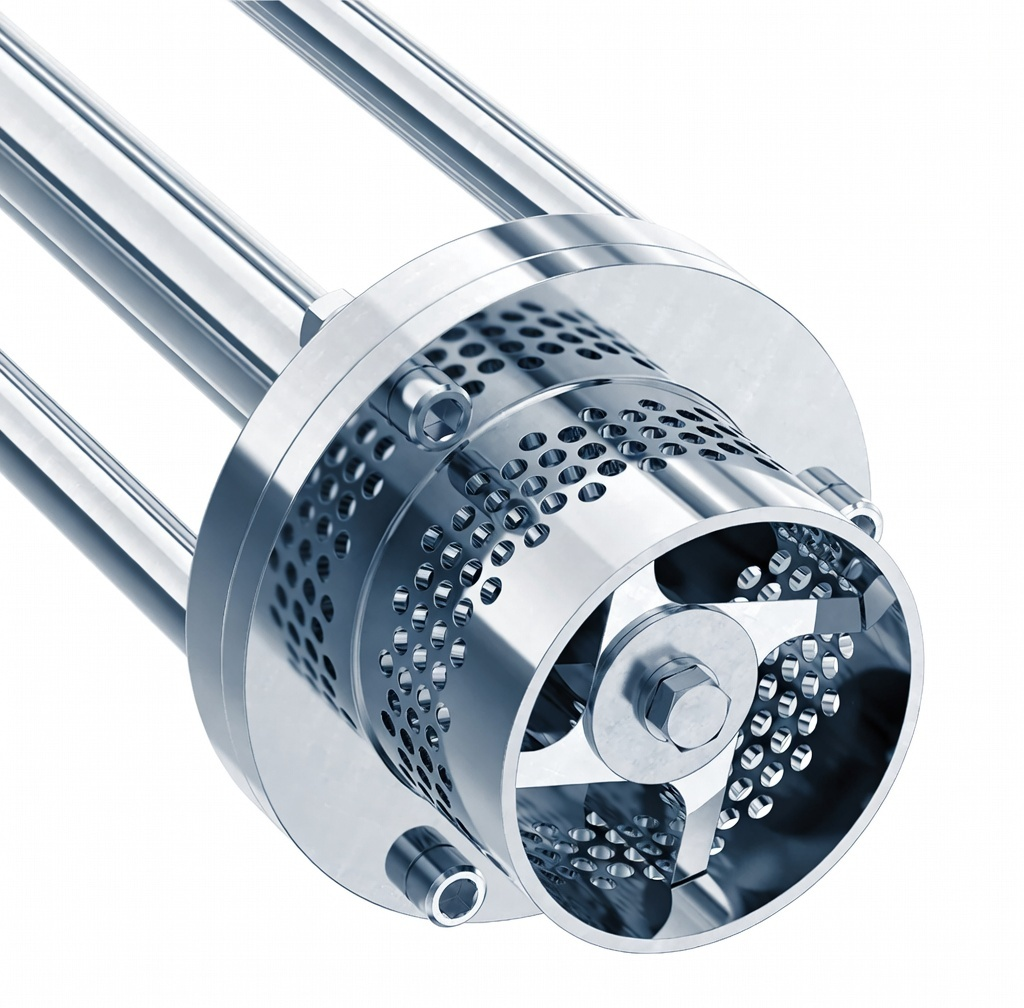
Mechanical Shear Mixers operate by drawing product into a high-speed rotating rotor that spins inside a stationary stator with precisely engineered slots or teeth.

The narrow clearance between the rotor and stator generates extremely high shear rates, typically ranging from 10,000 to over 100,000 s⁻¹.
This intense mechanical action, combined with hydraulic impact and cavitation, breaks down droplets, agglomerates, and particles to create fine, stable mixtures in a short time.

Available in both batch (top-entry or side-entry) and continuous inline configurations, mechanical shear mixers offer flexibility for laboratory, pilot, and full-scale production environments.

Key Features and Benefits

High Shear Intensity Delivers powerful mechanical shear for rapid emulsification and fine particle reduction.
Versatile Configurations Available as batch mixers for tanks or inline mixers for continuous pipeline processing.
Fast Processing Time Achieves uniform results in minutes rather than hours compared to traditional agitators.
Consistent Quality Provides repeatable, high-quality emulsions and dispersions with minimal batch variation.
Scalable Design Easy scale-up from laboratory to industrial production volumes.

Common Applications

  • Pharmaceutical creams, ointments, suspensions, and nano-formulations
  • Cosmetic lotions, serums, shampoos, and high-end personal care products
  • Food products including mayonnaise, sauces, dressings, and dairy emulsions
  • Chemical dispersions, adhesives, sealants, and polymer emulsions
  • Paints, coatings, inks, and pigment dispersions
  • Lubricants, fuel additives, and specialty chemical formulations

Mechanical Shear Mixers are essential equipment when fast, efficient, and high-quality mixing is required.
Their robust design, versatility, and ability to handle a wide range of viscosities make them a preferred choice for manufacturers seeking consistent results and reduced processing times.
Specifications

Technical Specifications – Mechanical Shear Mixers

Parameter Specification Notes / Options
Mixer Type Rotor-Stator Mechanical Shear Mixer Batch (Tank) or Inline (Pipeline) configurations
Shear Rate 10,000 – 120,000 s⁻¹ (model dependent) Higher rates available on ultra-high shear models
Power Range 0.5 HP to 150 HP Custom motors available
Viscosity Range 1 cP – 50,000 cP (up to 100,000 cP with recirculation) Higher viscosities possible with proper sizing
Materials of Construction 316L Stainless Steel, Hastelloy, Titanium, or coated options Electropolished finishes for sanitary applications
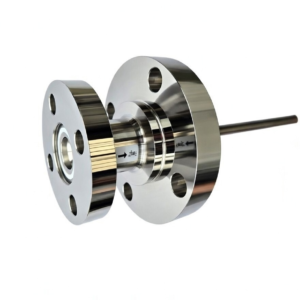
Connection Types Flanged, Tri-Clamp, Threaded, or Custom 3-A and EHEDG compliant options available
Seal Type Single or Double Mechanical Seal Barrier fluid system for hazardous or high-purity processes
Temperature Range -20°C to 180°C (standard) Higher temperatures available with special seals
Pressure Rating Up to 10 bar (150 psi) standard Higher pressure designs available on request
Motor Options TEFC, Explosion Proof, VFD Compatible, IEC or NEMA Variable frequency drives recommended for optimal control

Note: Specifications shown are for standard Mechanical Shear Mixer models.
Custom designs for higher pressure, higher viscosity, exotic materials, or specialized sanitary requirements are available upon request.
Always verify material compatibility and consult the manufacturer for your specific process conditions.

Power Vs Viscosity

Power Requirement vs. Viscosity

Mechanical Shear Mixer – 5 HP to 75 HP Models

Typical Power Consumption Curve

Viscosity (cP)     |   Power Required (HP)
─────────────────────────────────────────────
1             |    3.0  (Low Viscosity)
10             |    5.5
100             |    9.0
1000             |   15.0  ← Typical Design Point
5000             |   25.0
10000            |   38.0
20000            |   55.0  (Heavy-Duty / Recirculation Recommended)
50000+            |   75+  (Larger model required)

Mechanical Shear Mixers show a moderate increase in power demand as viscosity rises.
Recommended operating range: Up to 15,000 – 20,000 cP for most standard models.

Key Notes on Power vs. Viscosity

  • Power consumption increases steadily with viscosity due to higher fluid resistance.
  • Variable Frequency Drives (VFDs) are strongly recommended for precise speed control and to prevent motor overload.
  • For viscosities above 20,000 cP, recirculation loops or larger motor sizes are often required.
  • Batch mechanical shear mixers typically require less power than equivalent inline models at the same viscosity.
  • Always size the motor based on the highest expected viscosity during the mixing cycle.

Mechanical Shear Mixers offer a good balance between high shear performance and reasonable power consumption, making them versatile for a wide range of industrial applications.

Installation Procedures

Proper installation of Mechanical Shear Mixers is essential for safe operation, optimal shear performance, vibration control, and long equipment life.
Whether installing a batch tank-mounted unit or an inline pipeline model, correct alignment and support are critical.

Installation Procedures for Mechanical Shear Mixers

Step Installation Procedure Tools / Materials Required Safety & Important Notes
1 Verify the mixer model and configuration (batch or inline). Confirm flow direction for inline models and mounting type for batch units. None Incorrect orientation can reduce performance and cause damage.
2 Shut down the system, isolate, depressurize, and apply lockout/tagout (LOTO) procedures. Drain all lines or tanks completely. Lockout/Tagout kit Never install while the system is pressurized or contains product.
3 For batch mixers: Mount securely on the tank lid or bridge using the supplied mounting flange or clamp. Ensure the shaft is vertically aligned. Torque wrench, level Proper alignment prevents vibration and bearing wear.
4 For inline mixers: Align the mixer in the pipeline with correct flow direction. Use new compatible gaskets and torque flange bolts evenly in a criss-cross pattern. Calibrated torque wrench, new gaskets Follow manufacturer torque values to avoid distortion.
5 Install adequate supports for the mixer and motor. For inline units, add pipe supports on both inlet and outlet sides to absorb vibration. Pipe supports, vibration dampeners Mechanical shear mixers generate significant dynamic forces at high speeds.
6 Connect electrical power, verify motor rotation direction (correct if necessary), and connect any seal flush or cooling lines. Multimeter, wiring tools Double mechanical seals require continuous barrier fluid.
7 Perform a dry run (no product) at low speed, then gradually introduce process fluid. Monitor vibration, noise, temperature, and pressure drop. Vibration meter, pressure gauges Ramp up speed only after confirming stable operation.
8 Document installation details including torque values, alignment readings, baseline vibration, pressure drop, serial number, and startup observations. Update equipment log. Checklist and photos Complete records support warranty and future maintenance.

Important Notes:

• Always confirm correct motor rotation direction before introducing product.
• Provide strong structural support to minimize vibration, especially on inline models.
• For mechanical seals, ensure flush or barrier fluid is flowing before startup.
• Start at low speed and gradually increase while monitoring vibration and temperature.
• Mechanical Shear Mixers generate more heat than low-shear agitators — monitor discharge temperature closely.

Proper installation ensures reliable performance and maximum service life of your Mechanical Shear Mixer.

Maintenance Procedures

Regular maintenance of Mechanical Shear Mixers is essential to maintain high shear performance, prevent vibration issues, protect the rotor-stator assembly, and extend equipment life.

Maintenance Procedures for Mechanical Shear Mixers

Maintenance Task Procedure & Frequency
Daily / Visual Inspection • Check for leaks around the mechanical seal and connections
• Listen for unusual noise or excessive vibration
• Monitor motor temperature and discharge temperature
• Verify seal flush or cooling flow (if equipped)
After Each Shift / Weekly Cleaning • Thoroughly flush the mixer with compatible solvent or clean water
• Remove any product residue from rotor, stator, and housing
• Wipe down external surfaces
Monthly Inspection • Measure and record vibration levels at motor and housing
• Check pressure drop (inline models) and compare with baseline
• Inspect mechanical seal for leakage or wear
• Clean any strainers in flush lines
Quarterly Maintenance • Inspect rotor and stator for wear, erosion, or damage
• Check shaft runout and bearing condition
• Verify motor alignment and coupling tightness
• Replace worn O-rings and secondary seals as needed
Annual Major Service • Disassemble mixer (or remove cartridge if applicable)
• Inspect and replace mechanical seal faces
• Clean or replace bearings and check shaft condition
• Perform pressure test and vibration analysis after reassembly
After Process Change or Long Shutdown • Flush thoroughly before and after extended shutdowns
• Verify material compatibility with wetted parts and seals
• Run at low speed initially and monitor closely

Important Notes for Mechanical Shear Mixers:

• Monitor vibration levels daily — sudden increases often indicate bearing or rotor wear.
• Never run the mixer dry. Always ensure proper seal flush or barrier fluid flow.
• Mechanical shear generates heat — monitor discharge temperature, especially with viscous fluids.
• Use only manufacturer-approved spare parts and seal materials.
• Keep detailed records of vibration readings, pressure drop trends, and seal replacements.

Consistent preventive maintenance will ensure reliable high-shear performance and maximum service life.

Q&A

Question Answer
What are Mechanical Shear Mixers? Mechanical Shear Mixers are rotor-stator devices that generate intense mechanical shear forces (10,000 – 120,000 s⁻¹) to rapidly emulsify, homogenize, disperse, and reduce particle size in liquids.
What is the difference between Mechanical Shear Mixers and Static Mixers? Mechanical Shear Mixers use a high-speed rotating rotor inside a stator to create active high shear, while static mixers rely only on passive flow division with no moving parts. Mechanical shear mixers provide much higher intensity and are better for difficult emulsions.
Are Mechanical Shear Mixers available in batch or continuous configurations? Yes. Batch models are typically top-entry or side-entry for tanks, while inline models are installed directly in pipelines for continuous processing.
What viscosity range can Mechanical Shear Mixers handle? They typically handle viscosities from 1 cP up to 50,000 cP. For viscosities above 20,000 cP, recirculation loops or larger motors are often recommended.
What industries commonly use Mechanical Shear Mixers? Pharmaceuticals, cosmetics, food & beverage, chemicals, paints & coatings, adhesives, and lubricants — anywhere fine emulsions or uniform dispersions are required.
Do Mechanical Shear Mixers require regular maintenance? Yes. Key maintenance includes daily visual checks, regular seal inspection, vibration monitoring, and periodic rotor-stator inspection. Mechanical seals are the most common wear item.
What are the main advantages of Mechanical Shear Mixers? • Fast and efficient mixing
• High shear intensity for fine emulsions
• Versatile (batch or inline)
• Consistent, repeatable results
• Good scalability from lab to production
Can Mechanical Shear Mixers handle abrasive materials? They can handle light abrasives with proper material selection (e.g., hardened rotors or special coatings). Highly abrasive slurries may require more frequent rotor-stator replacement.

Note: Mechanical Shear Mixers are versatile, high-performance mixing solutions.
Proper sizing, installation, seal maintenance, and vibration monitoring are critical for achieving long-term reliability and consistent product quality.

Advantages / Disadvantages

Advantages Disadvantages
  • High shear intensity for rapid emulsification and fine particle size reduction
  • Versatile – available in both batch (tank) and inline (continuous) configurations
  • Fast processing time compared to traditional agitators
  • Consistent and repeatable mixing results with minimal batch variation
  • Good scalability from laboratory to full production volumes
  • Handles a wide viscosity range (1 – 50,000+ cP)
  • Relatively lower power consumption than ultra high shear models
  • Proven technology with many sanitary and industrial designs available
  • Mechanical seals require regular inspection and maintenance
  • Generates more heat than low-shear mixers, which may need cooling for sensitive products
  • Performance drops with very high viscosities without recirculation
  • Rotor and stator are subject to wear over time, especially with abrasive materials
  • Higher initial cost compared to simple agitators or static mixers
  • Can cause excessive shear damage to delicate or shear-sensitive ingredients
  • Requires proper support and alignment to minimize vibration
  • More moving parts mean higher maintenance needs than static mixers

Note: Mechanical Shear Mixers offer an excellent balance of high shear performance and versatility.
They are ideal for most emulsification and dispersion applications, though they require more maintenance than static mixers and generate more heat than low-shear systems.

Applications

Mechanical Shear Mixers are versatile, high-performance mixing systems widely used across industries that require rapid emulsification, homogenization, dispersion, and particle size reduction.
Their ability to generate intense shear forces makes them suitable for both batch and continuous processing.

Applications of Mechanical Shear Mixers

Industry / Application Typical Products / Processes Purpose & Benefits
Pharmaceuticals Creams, ointments, suspensions, gels, vaccine adjuvants, API dispersions Achieves uniform particle size and stable emulsions under sanitary conditions.
Cosmetics & Personal Care Lotions, creams, serums, shampoos, conditioners, sunscreens, toothpaste Delivers smooth texture, excellent stability, and consistent product quality.
Food & Beverage Mayonnaise, salad dressings, sauces, dairy emulsions, flavor emulsions, beverages Creates stable emulsions with improved mouthfeel and extended shelf life.
Chemicals & Adhesives Polymer emulsions, adhesives, sealants, lubricant additives, pigment dispersions Provides fast, homogeneous mixing of reactive and viscous systems.
Paints & Coatings Pigment dispersions, high-solids coatings, inks, color concentrates Ensures excellent color development, gloss, and uniform particle distribution.
Lubricants & Petrochemicals Lubricant emulsions, fuel additives, drilling fluids, wax dispersions Handles viscous fluids efficiently with consistent quality.

Mechanical Shear Mixers are particularly effective when:

  • Rapid emulsification or dispersion is required
  • Consistent product quality with minimal batch variation is critical
  • Both low and medium-high viscosity fluids need to be processed
  • Scalability from pilot to production is important
  • Sanitary or corrosion-resistant construction is needed

With their balance of high shear performance, versatility, and reliability, Mechanical Shear Mixers remain a popular choice for manufacturers seeking efficient and consistent mixing results across diverse industrial applications.

Download

Drawings

Reviews

There are no reviews yet.

Only logged in customers who have purchased this product may leave a review.