,

Vane Flow Straighteners

Vane Flow Straighteners are precision devices installed in pipelines to eliminate swirl, turbulence, and uneven velocity profiles.
They create a smooth, uniform flow upstream of flow meters, valves, and other sensitive equipment.

What Are Vane Flow Straighteners?

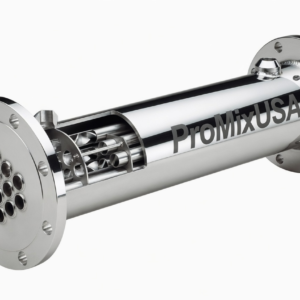
They consist of a series of angled vanes or honeycomb elements housed inside a pipe section. As fluid passes through, rotational motion and cross-flow turbulence are removed, resulting in a stable and uniform velocity profile.

Vane Flow Straighteners are commonly used in water treatment, chemical processing, oil & gas, and power generation where accurate flow measurement is critical.

Key Benefits

Improved Accuracy Significantly enhances flow meter performance by removing swirl and turbulence.
Reduced Straight Pipe Run Shortens required upstream piping from 20–30 diameters to as little as 5–10 diameters.
Low Pressure Drop Aerodynamic vane design minimizes energy loss compared to other straightener types.
Versatile Materials Available in PVC, CPVC, stainless steel, and exotic alloys for various process conditions.

Vane Flow Straighteners are a simple, effective, and low-maintenance solution for achieving stable flow conditions in demanding industrial applications.

Vane Flow Straighteners are precision-engineered devices that install directly in pipelines to eliminate turbulence, swirl, and uneven velocity profiles.
Furthermore, these devices straighten the flow and create a smooth, uniform velocity profile upstream of flow meters, valves, pumps, or other sensitive equipment. As a result, they significantly improve measurement accuracy and protect downstream components from flow disturbances. In addition, engineers often place them in straight pipe runs where flow conditions remain unstable. Consequently, the system achieves more reliable and repeatable performance. Moreover, vane flow straighteners require minimal maintenance because they contain no moving parts.

What Are Vane Flow Straighteners?

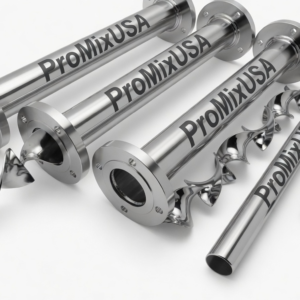
A Vane Flow Straightener consists of a series of carefully angled vanes or honeycomb-style elements housed inside a pipe section.
As fluid passes through the vanes, rotational motion (swirl) and cross-flow turbulence are significantly reduced, producing a uniform velocity profile.

They are commonly installed upstream of flow meters (such as electromagnetic, ultrasonic, turbine, or differential pressure meters) to improve measurement accuracy and repeatability.

Key Benefits

Improved Flow Measurement Accuracy Eliminates swirl and turbulence that can cause flow meter errors, ensuring highly accurate and repeatable readings.
Reduced Straight Pipe Run Requirements Can reduce the required upstream straight pipe length from 20–30 diameters down to as little as 5–10 diameters.
Low Pressure Drop Designed with aerodynamic vane profiles to minimize pressure loss compared to tube bundle or perforated plate straighteners.
Versatile Material Options Available in PVC, CPVC, 316 Stainless Steel, Hastelloy, and other materials to suit corrosive or high-temperature applications.
Easy Installation Can be installed between flanges or welded inline with minimal disruption to existing piping systems.

Common Applications

Vane Flow Straighteners are widely used in:

  • Water and wastewater treatment plants
  • Chemical and petrochemical processing
  • Oil & gas flow measurement stations
  • Power generation (cooling water and steam lines)
  • HVAC and large pumping systems
  • Any application requiring high-accuracy flow measurement

By conditioning the flow profile, Vane Flow Straighteners significantly improve the performance and reliability of downstream instrumentation while reducing installation costs associated with long straight pipe runs.
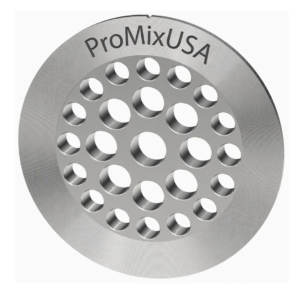
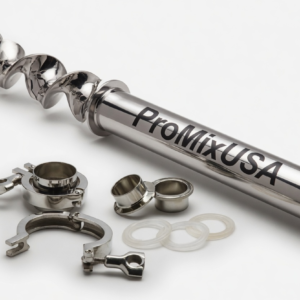
Specifications

Vane Flow Straighteners (also known as vane-type flow conditioners) are engineered devices designed to remove swirl, reduce flow turbulence, and create a uniform velocity profile upstream of flow meters, pumps, or other process equipment.
They utilize a series of precisely angled radial vanes to straighten the flow with minimal pressure loss.

Detailed Specifications – Vane Flow Straighteners

Parameter Standard Specification Notes / Options
Type Radial Vane Flow Straightener / Vane-type Flow Conditioner Helical or straight vane configurations available
Available Sizes 2″ to 48″ (DN50 to DN1200) Larger diameters available on request
Material of Construction 316L Stainless Steel (standard), Carbon Steel, Duplex Stainless Steel, Hastelloy, Titanium, PVDF, PVC Material selected based on process fluid compatibility
Vane Design Radial vanes with optimized angle (typically 20°–45°) Custom vane count and angle for specific flow profiles
Length Typically 2D to 4D (where D = pipe diameter) Shorter lengths available for space-constrained installations
Pressure Rating Up to 600# ANSI / PN100 (higher ratings available) Matches mating pipe flange rating
Temperature Rating -320°F to 1200°F (-196°C to 650°C) depending on material Limited by material selection
Pressure Drop Very Low – Loss Coefficient K ≈ 0.8 – 1.5 Significantly lower than perforated plate or tube bundle conditioners
Flow Conditioning Performance Removes >95% swirl within 5–10 pipe diameters downstream Produces near-fully developed turbulent velocity profile
Installation Configurations Wafer style, Flanged (RF/RTJ), Welded, Between flanges Wafer style most common for retrofits
Standards Compliance ASME B16.5, ASME B31.3, ISO 5167, AGA Report No. 3 Designed to improve flow meter accuracy per industry standards
Applications Upstream of orifice plates, ultrasonic meters, turbine meters, venturi tubes, pumps, and elbows Ideal for custody transfer, high-accuracy metering, and flow profile correction

Vane Flow Straighteners are custom-engineered based on pipe size, flow velocity, fluid properties, and required downstream straight-run reduction.
The number, angle, and length of the vanes are optimized to achieve the best balance between swirl removal and minimal pressure loss.

These devices are particularly valued in applications where low permanent pressure loss is critical, such as pump suction lines, long pipelines, or gravity-fed systems, while still providing excellent flow conditioning performance.

Pressure Drop

Pressure Drop vs. Flow Rate

Vane Flow Straightener – 4″ Nominal Size
Fluid: Water (1 cP viscosity) at 68°F (20°C)

Typical Pressure Drop Curve for Vane Flow Straightener

Flow Rate (GPM)  |  Pressure Drop (psi)
─────────────────────────────────────
50          |   0.15
100          |   0.45
150          |   0.85
200          |   1.35
250          |   1.95  ← Typical Design Point
300          |   2.65
400          |   4.10
500          |   6.20

Pressure loss coefficient (K) ≈ 0.8 – 1.2 (very low compared to perforated plates or static mixers)
Recommended operating range for 4″ vane straightener: 80 – 450 GPM

Key Characteristics of Pressure Drop

  • Very low pressure drop — typically 0.75 to 1.25 loss coefficient, much lower than perforated plate conditioners (K ≈ 2.0)
  • Pressure drop scales approximately with the square of the flow velocity
  • Minimal increase in pressure loss even at higher flow rates compared to more aggressive flow conditioners
  • Excellent for applications where energy efficiency and low head loss are critical (pumps, long pipelines, gravity-fed systems)
  • Pressure drop remains low across a wide Reynolds number range in turbulent flow
  • Actual values depend on vane design, pipe size, fluid viscosity, and density

Vane flow straighteners are among the lowest pressure-drop flow conditioning devices available.
They are ideal when you need to remove swirl and improve velocity profile with minimal impact on system energy consumption or pump requirements.

For your specific pipe size, flow rate, fluid properties, or custom vane design, we recommend requesting a detailed pressure drop calculation from the manufacturer.

Applications

Vane Flow Straighteners are essential flow conditioning devices used across many industries to eliminate swirl and turbulence, ensuring accurate and reliable flow measurement.

Applications of Vane Flow Straighteners

Industry / Application Typical Use Cases Purpose & Benefits
Water & Wastewater Treatment Upstream of electromagnetic, ultrasonic, and turbine flow meters Ensures accurate flow measurement for billing, process control, and regulatory compliance.
Chemical Processing Before flow meters in acid, caustic, and solvent lines Provides stable flow profile for precise dosing and batching of corrosive chemicals.
Oil & Gas Custody transfer metering stations and pipeline monitoring Reduces measurement uncertainty and improves fiscal metering accuracy.
Power Generation Cooling water systems, condensate lines, and feedwater measurement Ensures reliable flow data for efficiency monitoring and pump performance.
HVAC & Building Services Chilled water, hot water, and large pumping systems Improves flow meter accuracy in large-diameter pipes with limited straight runs.
Pulp & Paper Industry Chemical dosing and stock flow measurement Handles fibrous slurries while maintaining stable flow conditions.
Food & Beverage Sanitary process lines (where stainless steel versions are used) Ensures accurate ingredient dosing and flow control.

Vane Flow Straighteners are particularly valuable in installations with limited straight pipe runs, where achieving the required flow profile for accurate measurement would otherwise need long sections of straight piping.

Installation Procedures

Proper installation of Vane Flow Straighteners is essential for effective flow conditioning and accurate downstream flow measurement.
Follow these step-by-step instructions to ensure optimal performance and long-term reliability.

Installation Procedures for Vane Flow Straighteners

Step Installation Procedure Tools / Materials Required Safety Notes
1 Shut down the process line, isolate the section, depressurize completely, and apply lockout/tagout (LOTO) procedures. Lockout/Tagout kit, blinds, pressure gauge Ensure zero energy state before starting work.
2 Verify the flow direction — the arrow marked on the straightener body must point in the direction of process flow. None Incorrect orientation will reduce effectiveness.
3 Install the vane flow straightener using appropriate connections (flanged, threaded, or welded) with compatible gaskets or sealant. Gaskets, bolts, torque wrench, thread sealant or welding equipment Tighten bolts in a criss-cross pattern to manufacturer’s torque specifications.
4 Provide proper pipe supports on both sides of the straightener to prevent mechanical stress and vibration. Pipe supports or hangers Avoid placing excessive weight on the straightener body.
5 Slowly repressurize the line and perform thorough leak checks at all connections. Pressure gauge, leak detection solution Use appropriate PPE. Monitor for at least 30 minutes.
6 Document the installation details, orientation, and initial test results in the equipment log. Installation checklist Include serial number and installation date.

Important Note: Always refer to the manufacturer’s specific installation manual for your Vane Flow Straightener model.
Ensure correct flow direction and proper pipe support. Incorrect installation can reduce flow conditioning effectiveness and affect downstream measurement accuracy.

Maintenance Procedures

Vane Flow Straighteners are robust, passive devices with no moving parts, making them extremely low-maintenance. However, periodic inspection and cleaning are recommended to maintain optimal flow conditioning performance and prevent buildup or damage.

Maintenance Procedures for Vane Flow Straighteners

Maintenance Task Procedure & Recommendations
Routine Visual Inspection • Inspect external pipe and flanges for cracks, corrosion, or damage
• Check for leaks at all connections
• Look for any signs of external buildup or discoloration
Internal Cleaning • Flush the straightener with clean water or a compatible solvent to remove debris
• For stubborn deposits, use a mild, non-abrasive cleaning solution approved for the material
• If accessible, remove the unit for thorough internal cleaning of the vane elements
Vane Element Inspection • Periodically inspect the internal vanes for bending, erosion, or heavy scaling
• Clean or replace damaged vane elements if flow performance has decreased
Connection & Support Check • Verify all flanges, welds, or threaded connections are secure and leak-free
• Ensure proper pipe supports to prevent mechanical stress on the straightener
Performance Verification • Monitor downstream flow meter readings for consistency
• Check pressure drop across the straightener
• Investigate any sudden changes in system performance

Important Note: Vane Flow Straighteners are passive devices with no moving parts and typically require very little maintenance.
Regular flushing and visual inspections help prevent buildup and ensure consistent flow conditioning performance.
Always use cleaning agents compatible with the straightener’s material (PVC, CPVC, stainless steel, etc.).

Q&A

Question Answer
What is a Vane Flow Straightener? A Vane Flow Straightener is a flow conditioning device that uses a series of angled vanes or honeycomb elements inside a pipe section to remove swirl, turbulence, and uneven velocity profiles, creating a smooth and uniform flow.
How does a Vane Flow Straightener work? As fluid flows through the vanes, rotational (swirl) motion and cross-flow turbulence are disrupted and straightened. The vanes divide, redirect, and recombine the flow, resulting in a stable, uniform velocity profile downstream.
Why are Vane Flow Straighteners needed? Many flow meters (ultrasonic, turbine, magnetic, etc.) require a fully developed, swirl-free flow profile for accurate measurement. Vane straighteners correct distorted flow caused by elbows, valves, or pumps upstream.
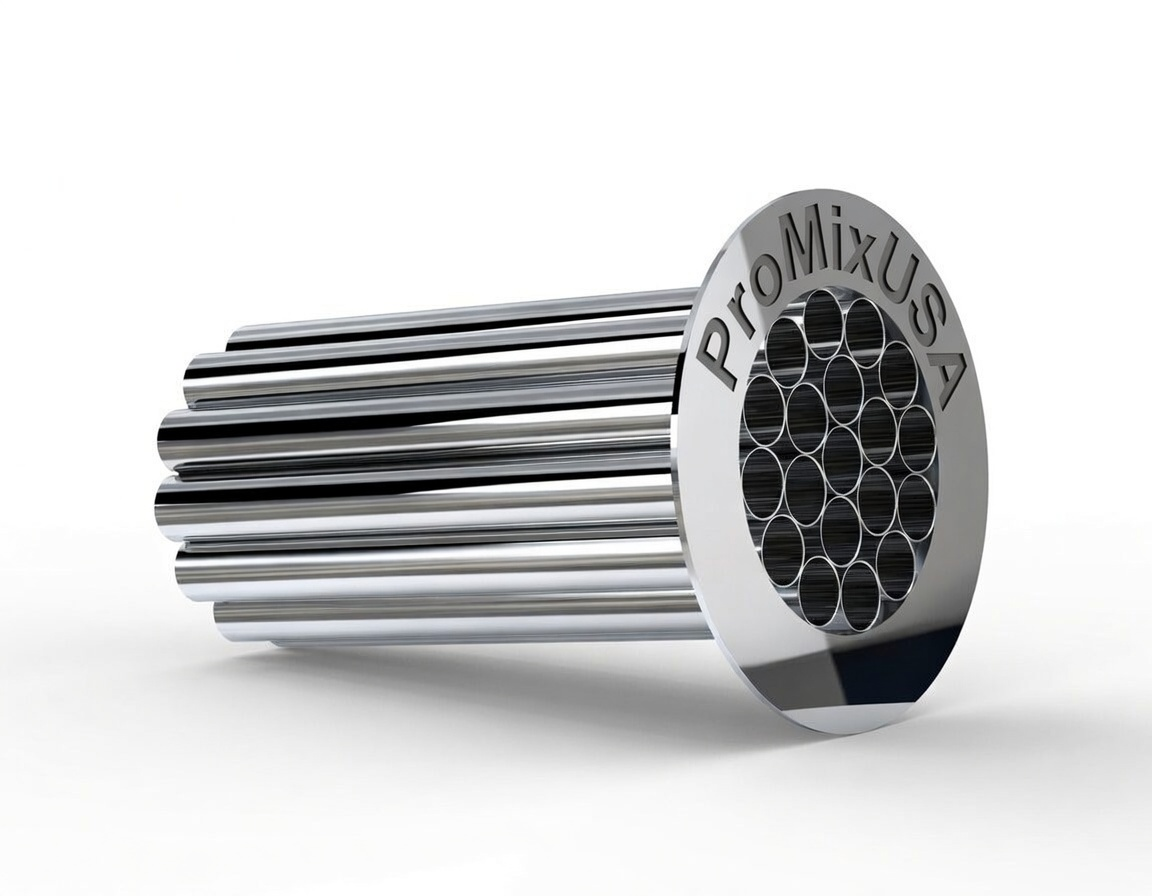
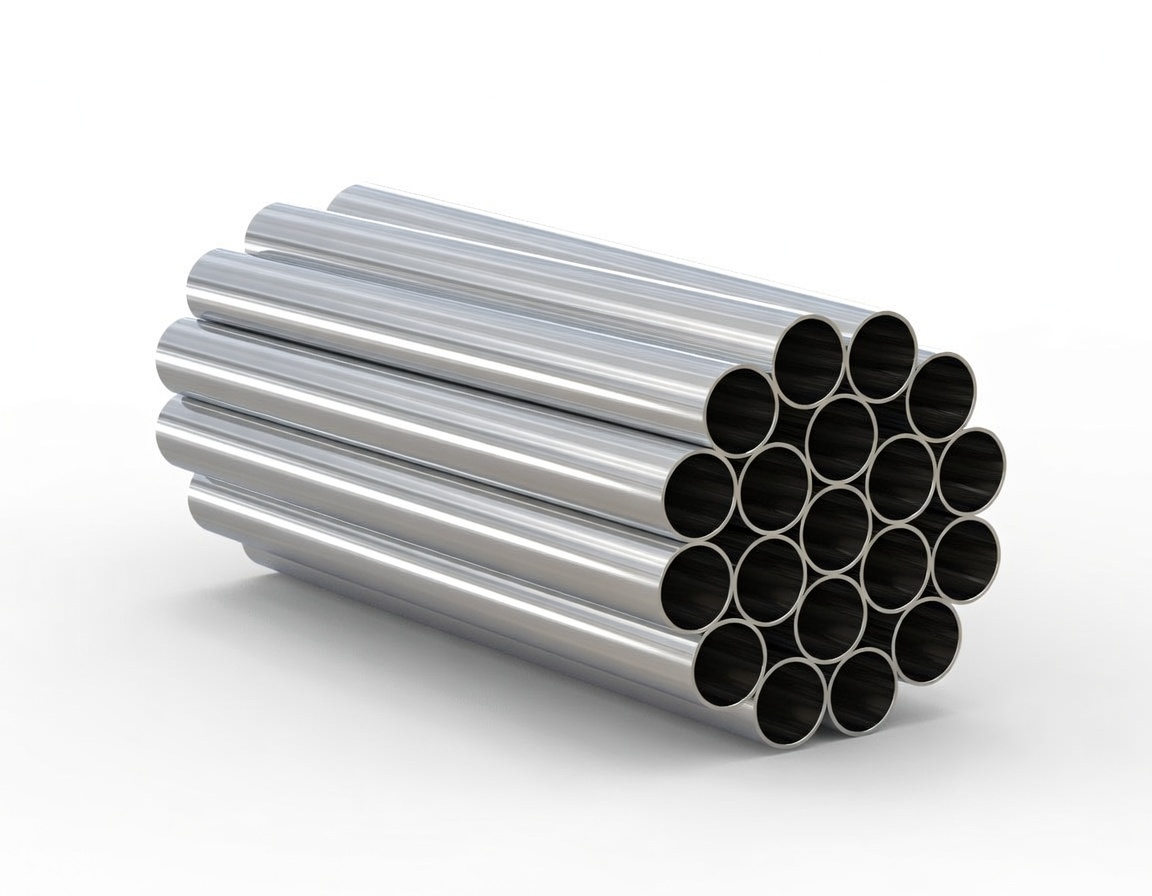
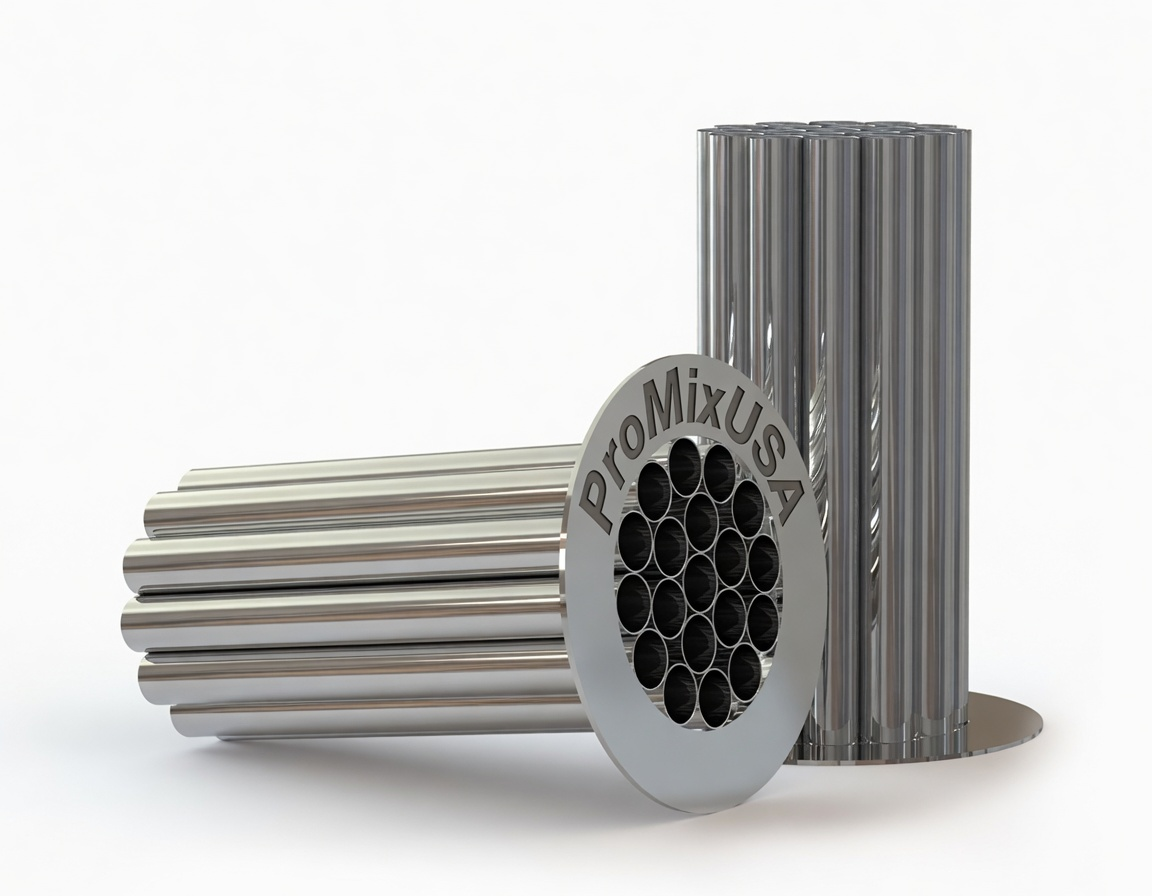
What is the difference between vane and tube bundle straighteners? Vane straighteners use aerodynamic profiled vanes and typically produce lower pressure drop. Tube bundle straighteners use multiple small tubes and are effective but often create higher pressure loss.
How much straight pipe do I need with a vane flow straightener? Vane straighteners can reduce the required upstream straight pipe length from 20–30 pipe diameters down to as little as 5–10 diameters, depending on the application and meter type.
What materials are vane flow straighteners available in? Common materials include PVC, CPVC, 316 Stainless Steel, Hastelloy, and carbon steel to suit different pressure, temperature, and chemical compatibility requirements.
Where should a vane flow straightener be installed? It should be installed upstream of flow meters, pumps, control valves, or any equipment sensitive to flow disturbances. The straightener must be installed with the flow arrow pointing in the correct direction.
Do vane flow straighteners require maintenance? They have no moving parts and require minimal maintenance. Periodic flushing and visual inspection are usually sufficient to prevent buildup.
Can vane flow straighteners handle corrosive fluids? Yes. When constructed from PVC, CPVC, or exotic alloys like Hastelloy, they offer excellent resistance to corrosive chemicals and acids.
What is the typical pressure drop across a vane flow straightener? Pressure drop is generally very low (typically 0.5 – 2 psi), depending on flow rate, pipe size, and design. This is significantly lower than many other types of flow conditioners.

Note: Always refer to the manufacturer’s technical data and installation guidelines for your specific Vane Flow Straightener model. Proper sizing, material selection, and installation orientation are critical for achieving the best flow conditioning performance.

You may also like…