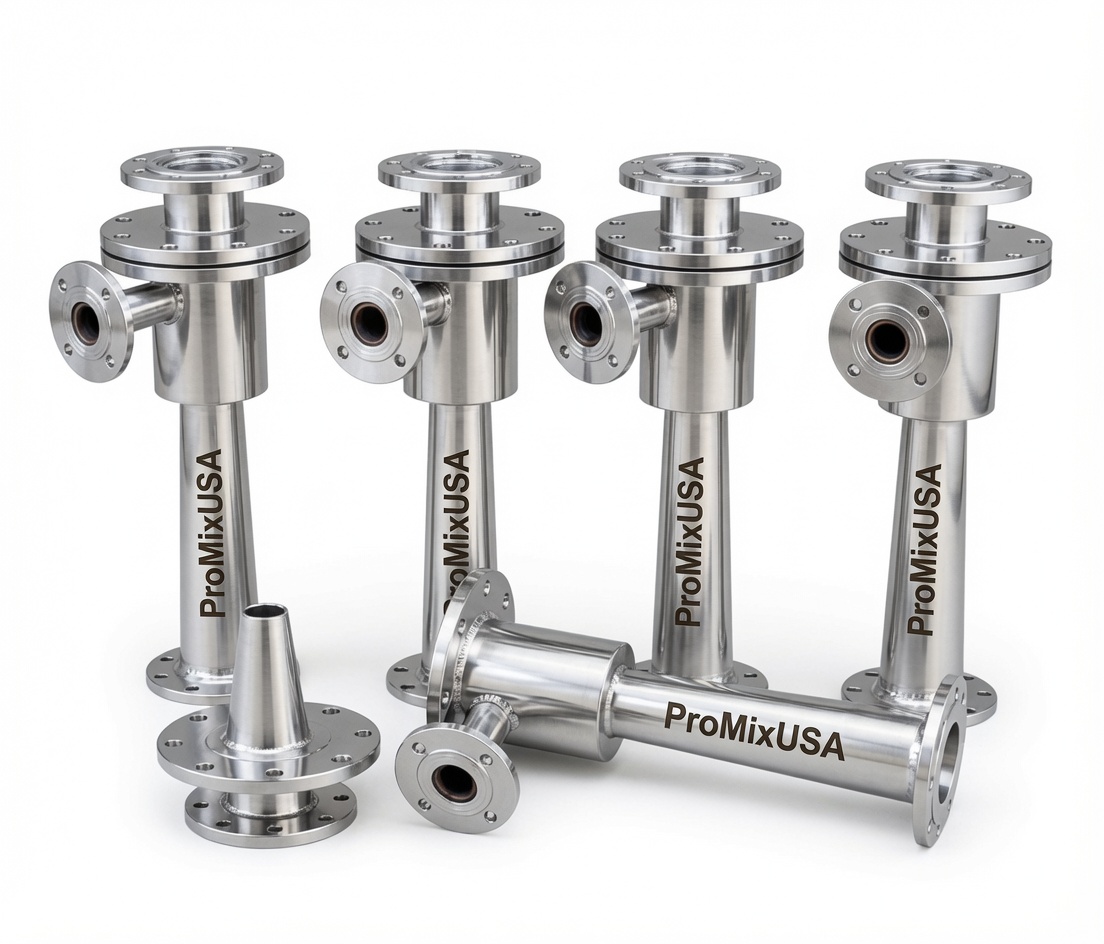
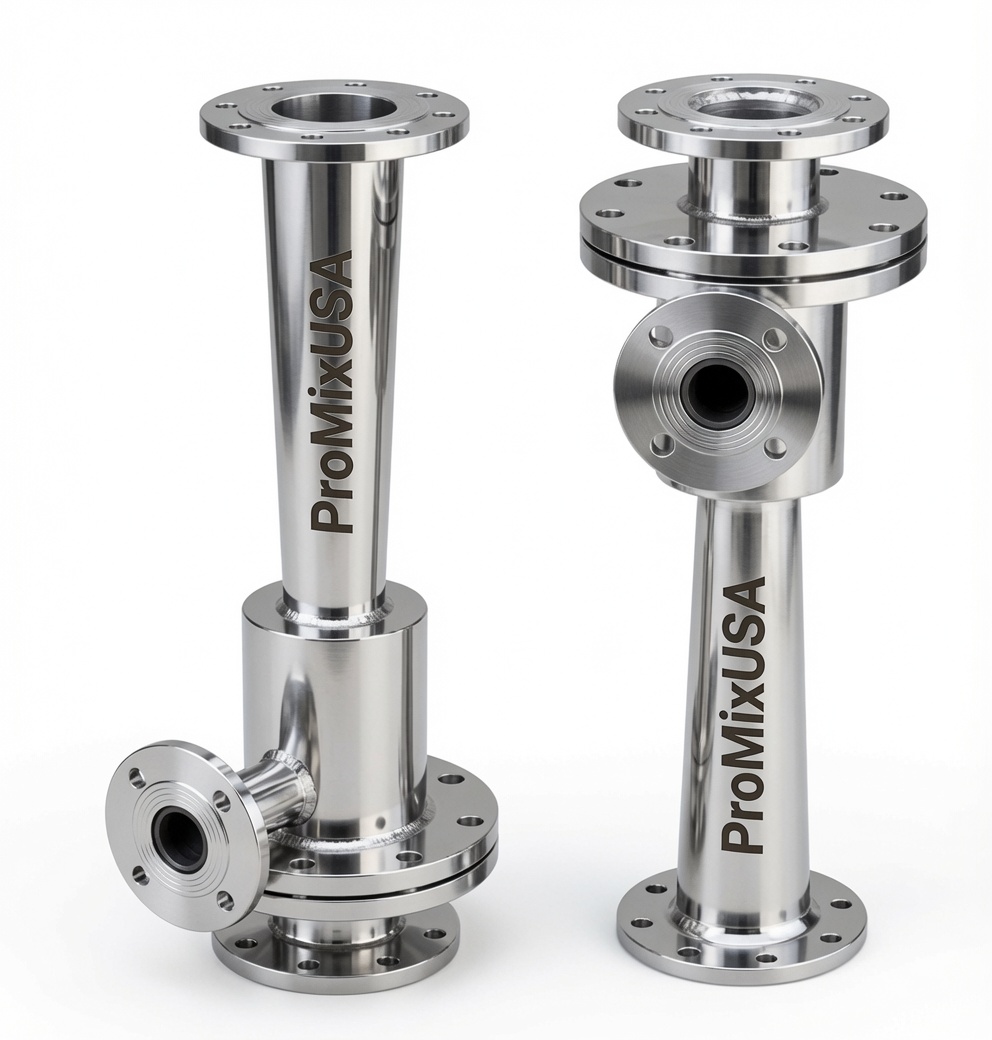
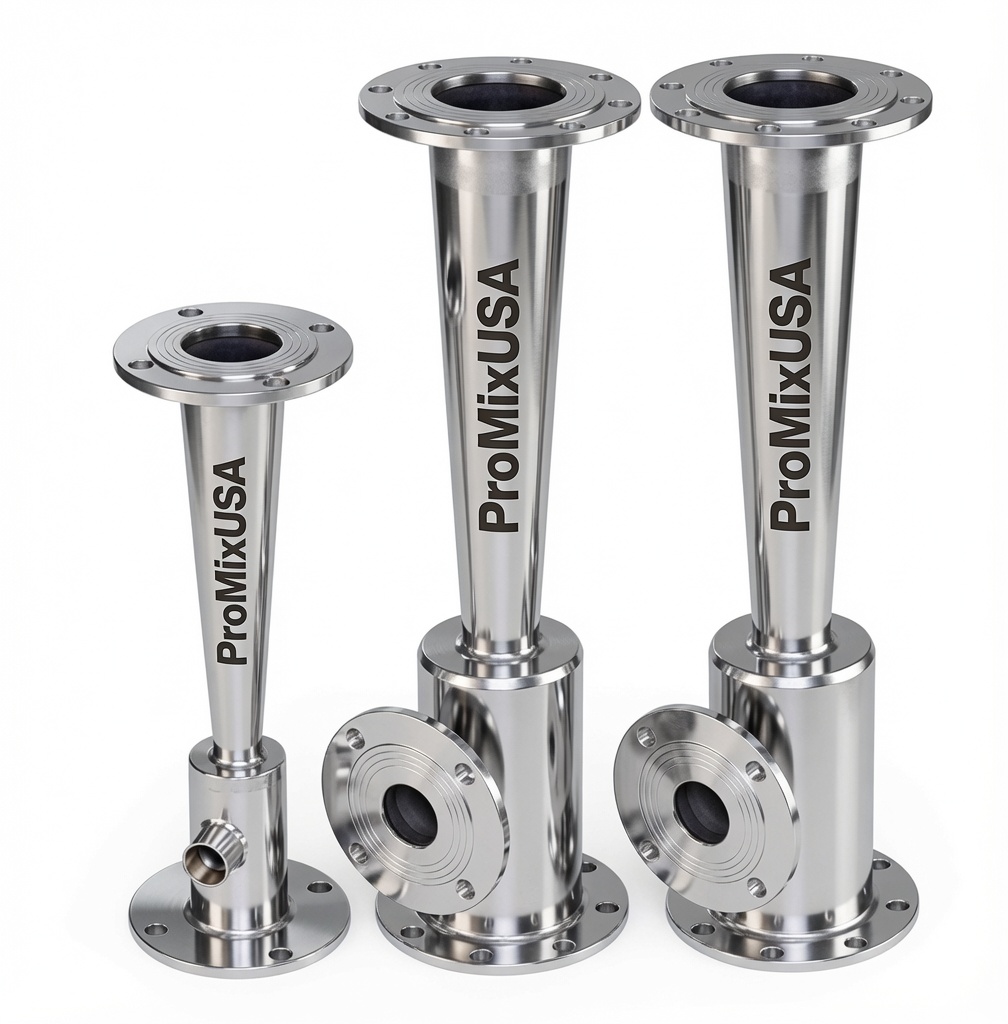
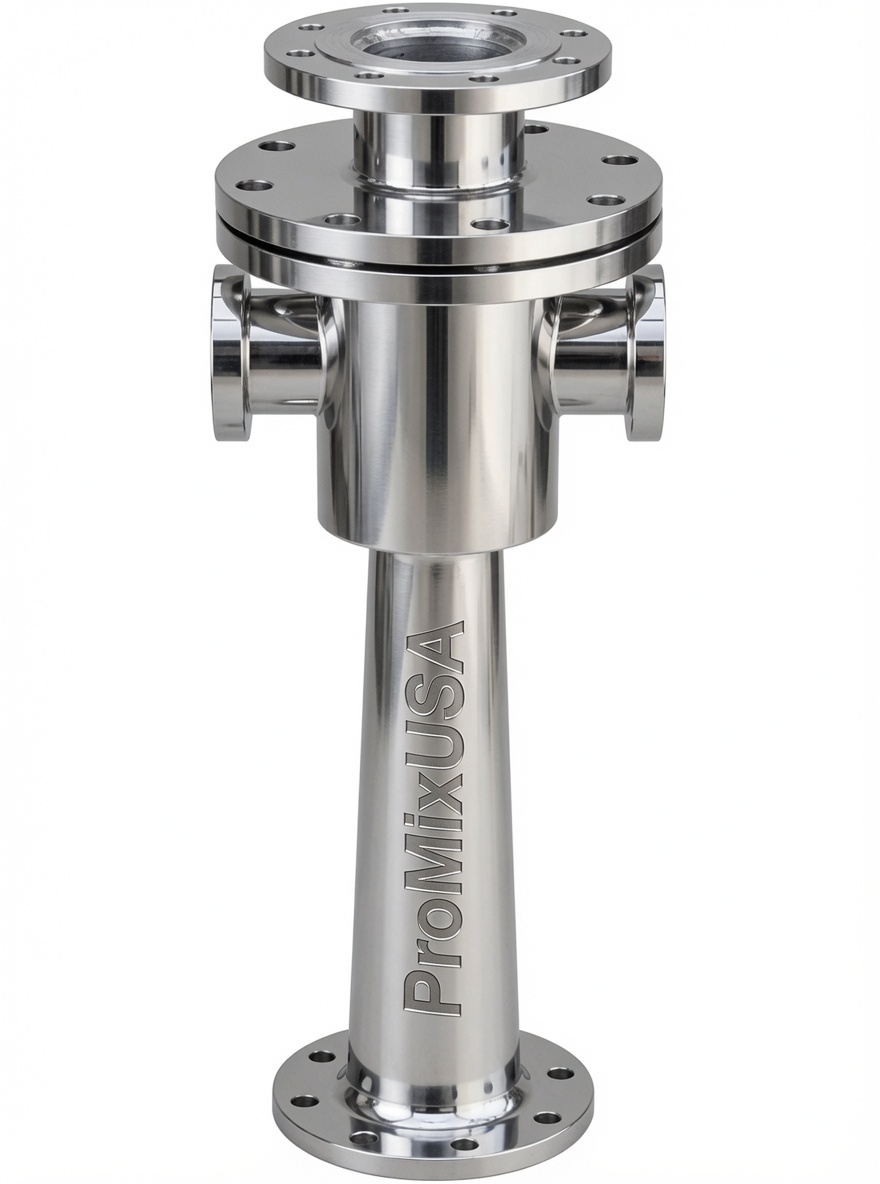
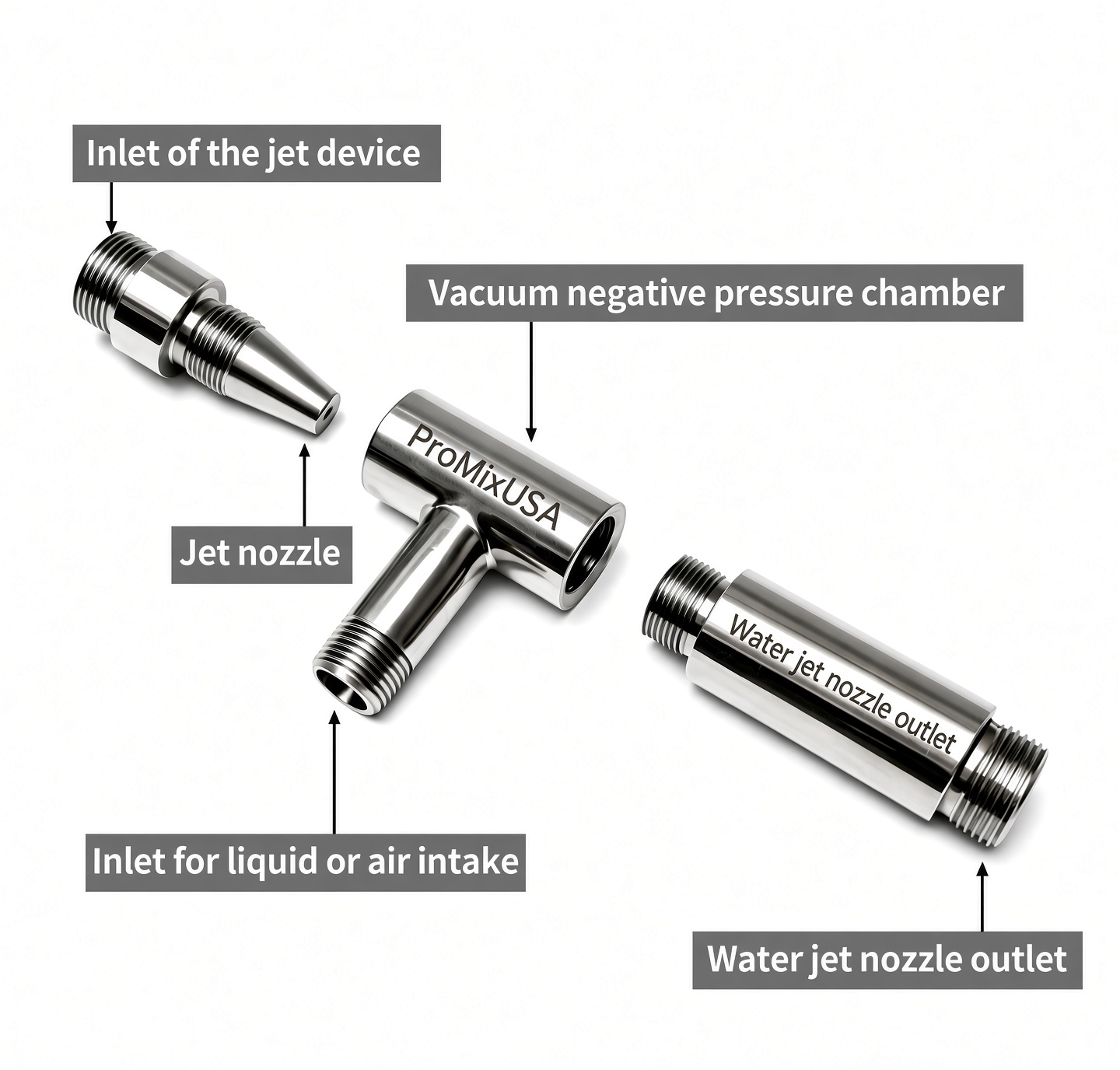
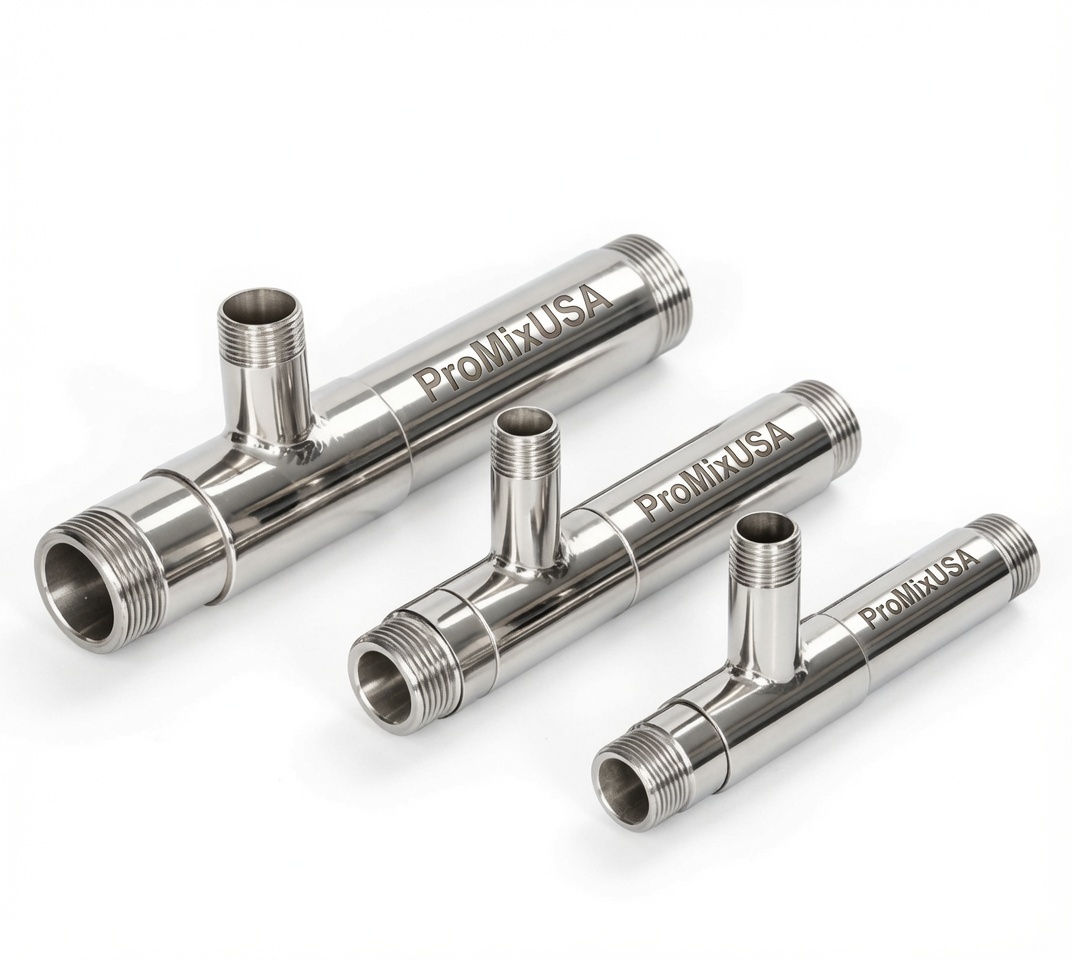
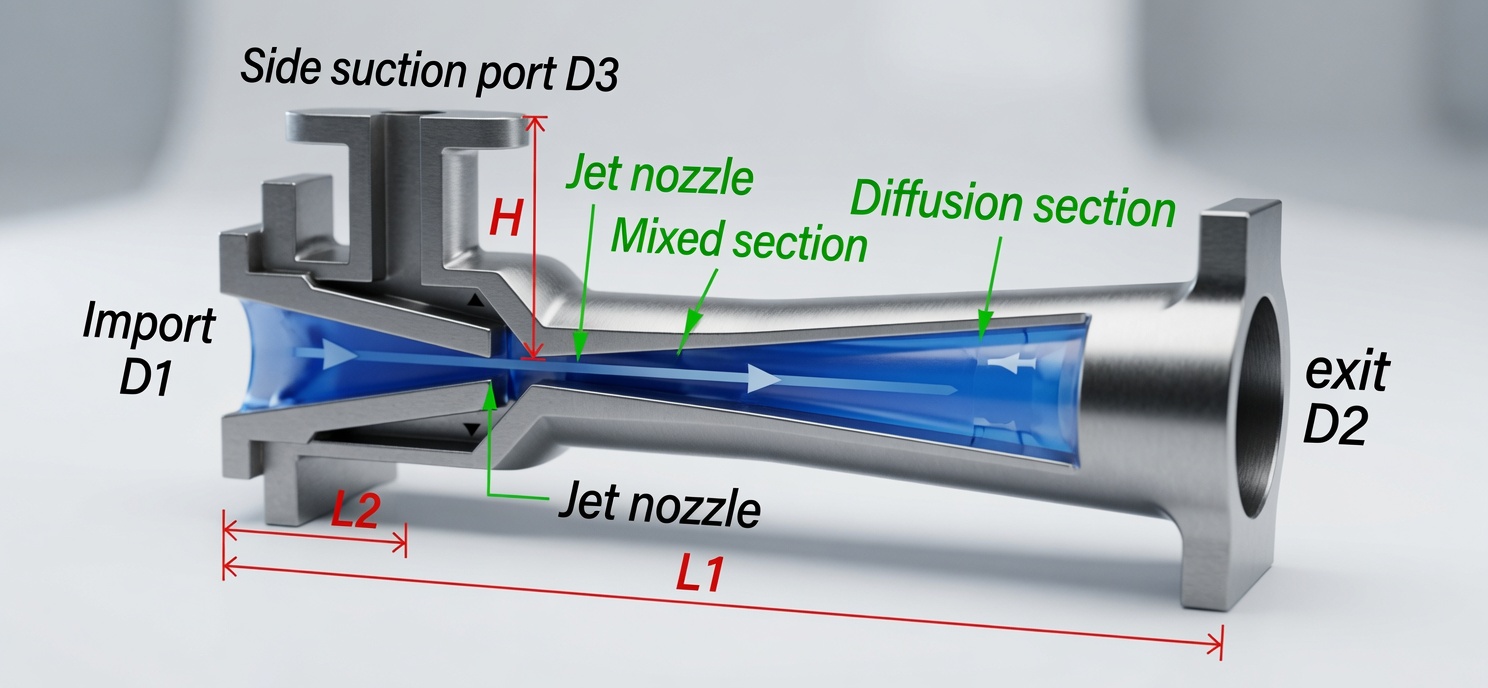
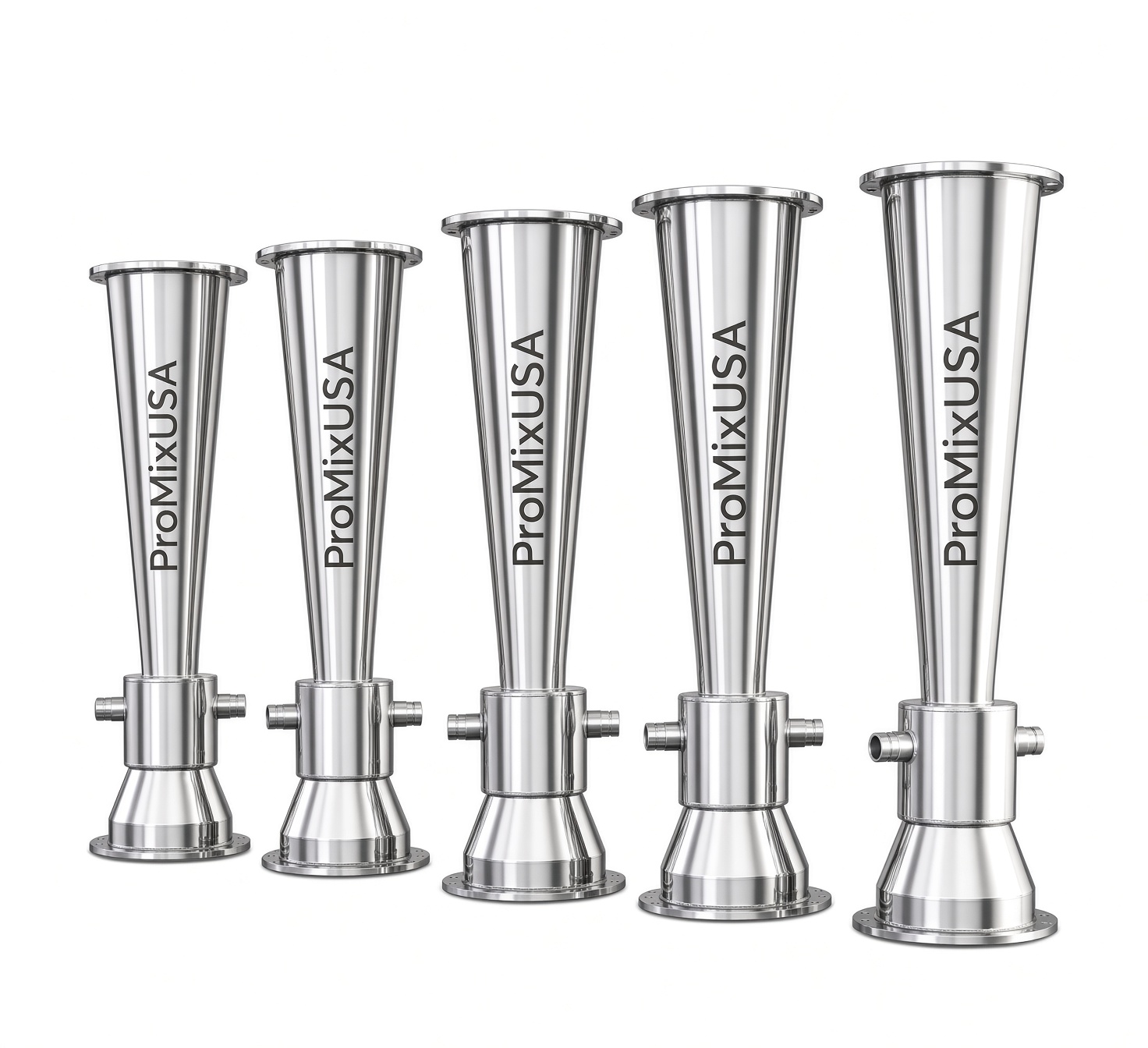
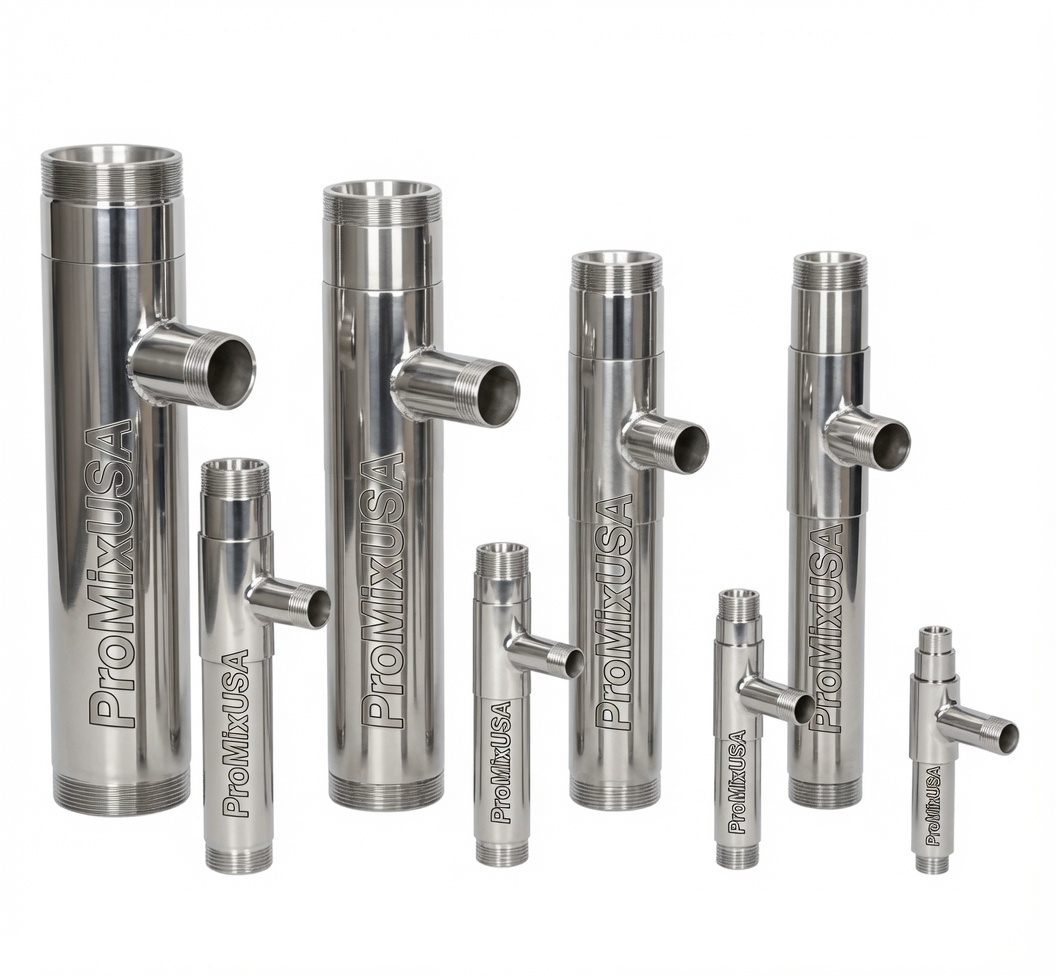
 Venturi Injectors, also known as Venturi tubes, chemical injectors, or fertilizer injectors, are precision-engineered passive devices that utilize the Venturi effect to inject chemicals, fertilizers, gases, or additives into a pressurized fluid stream. They require no external power or moving parts, making them highly reliable, low-maintenance, and cost-effective solutions for chemical dosing, fertigation, water treatment, and process injection applications.
What Are Venturi Injectors?
| Definition | A specially designed tube featuring a converging inlet section, a narrow throat, and a diverging outlet (diffuser) section that creates a vacuum to draw in secondary fluids. |
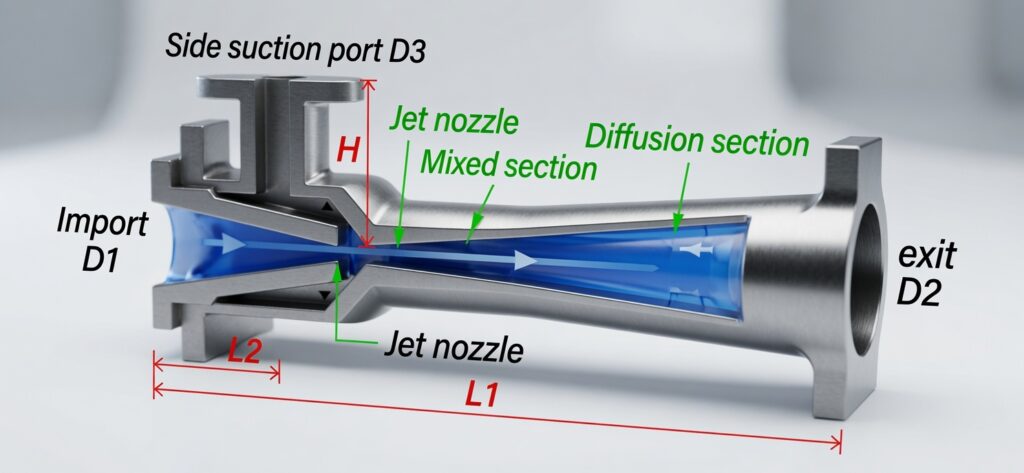
| Operating Principle | Based on Bernoulli’s principle: as fluid velocity increases through the constriction, static pressure decreases, generating suction at the throat. |
| Installation | Installed in-line on smaller systems or more commonly in a bypass (shunt) loop around a restriction (valve, orifice, or pressure-reducing valve) on larger pipelines. |
| Materials | Chemically resistant materials including PVC, polypropylene, PVDF (Kynar), and stainless steel for compatibility with aggressive chemicals. |
How Venturi Injectors Work – Step by Step
| Motive Fluid Entry | Pressurized water or process fluid enters the converging inlet at relatively high pressure and moderate velocity. |
| Acceleration & Pressure Drop | As the flow passage narrows, fluid velocity rises sharply and static pressure falls, converting pressure energy into kinetic energy. |
| Vacuum Creation | At the narrowest point (the throat), pressure drops below atmospheric pressure, generating a strong suction effect at the injection port. |
| Chemical Entrainment | The vacuum draws secondary fluid (chemical, fertilizer, or gas) from a supply tank through the suction port into the high-velocity stream. |
| Intense Mixing | Turbulence within the throat thoroughly blends the injected fluid with the motive stream, producing a homogeneous mixture. |
| Pressure Recovery | In the diverging diffuser section, velocity decreases and a portion of the kinetic energy is converted back into static pressure. |
Most Venturi injectors require a minimum pressure differential of 15–20 % (commonly 20–50 %) between inlet and outlet to initiate effective suction. With adequate differential, near-full vacuum levels (approaching 28 inches of mercury) can be achieved. Injection rate depends on motive flow rate, the magnitude of the pressure differential, suction-line restrictions, and the liquid level in the chemical supply tank.
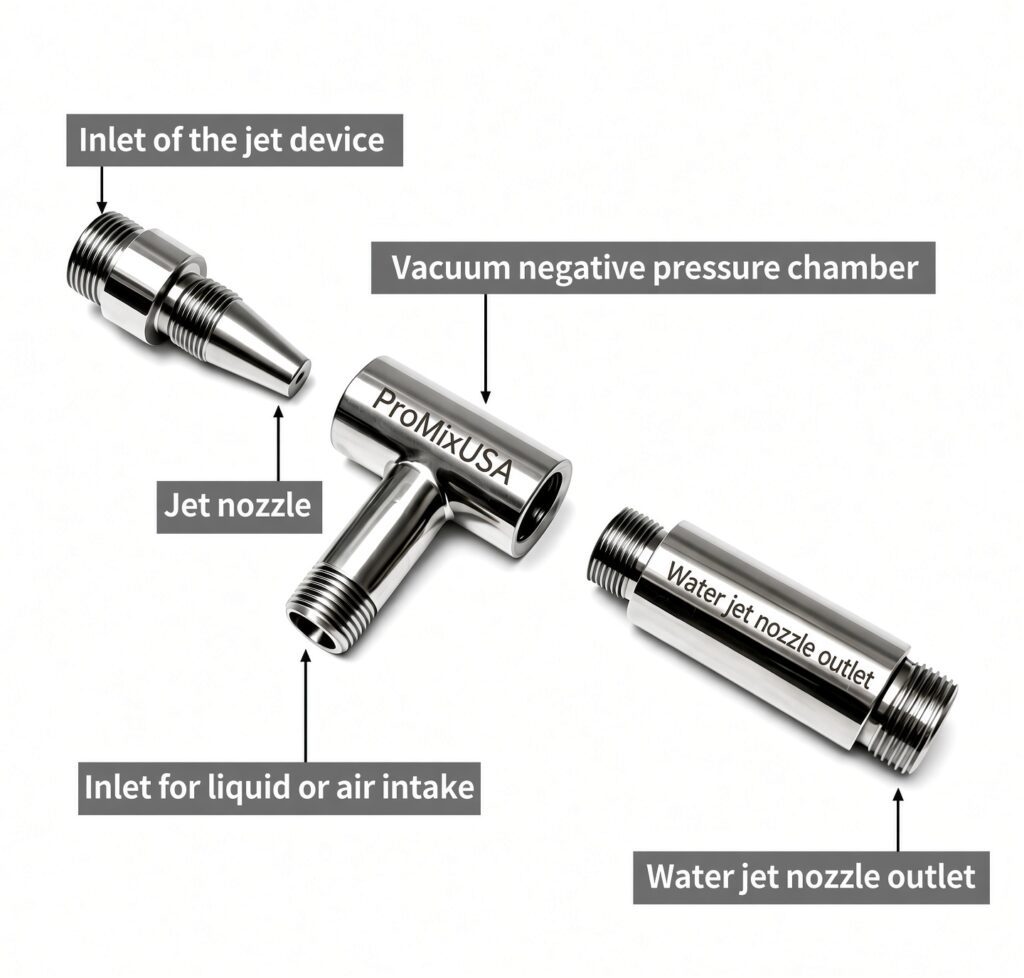
Key Benefits of Venturi Injectors
| No Moving Parts | Extremely reliable operation with virtually no mechanical wear, resulting in long service life and minimal maintenance requirements. |
| No External Power Needed | Operates solely on system pressure energy; ideal for remote locations or hazardous areas where electricity is unavailable or undesirable. |
| Simple & Cost-Effective | Lower capital and operating costs compared with positive-displacement dosing pumps; easy to install on new or existing systems. |
| Proportional Injection | Under stable conditions, injection rate scales with motive flow, helping maintain relatively consistent chemical concentration. |
| Excellent Chemical Resistance | Available in PVC, PP, PVDF, and stainless steel to handle acids, bases, oxidizers, fertilizers, and aggressive process chemicals. |
| Thorough Mixing | High-velocity jet and turbulent throat produce rapid, uniform dispersion of injected fluids or gases into the main stream. |
Typical Applications
| Agriculture & Irrigation | Fertilizer and nutrient injection (fertigation), pesticide application, and soil amendment dosing in drip and sprinkler systems. |
| Water & Wastewater Treatment | Chlorine, ozone, hydrogen peroxide, or acid/base injection for disinfection, oxidation, and pH adjustment. |
| Industrial Process Dosing | Chemical addition into cooling water, boiler feed, process streams, and cleaning systems. |
| Gas Injection | Efficient introduction of ozone, oxygen, CO₂, or air into water for aeration, ozonation, or carbonation. |
Operating Requirements & Performance
| Minimum Pressure Differential | 15–20 % (commonly 20–50 %) between inlet and outlet to initiate effective suction. |
| Vacuum Capability | Near-full vacuum levels approaching 28 inches of mercury with adequate differential. |
| Injection Rate Factors | Depends on motive flow rate, pressure differential magnitude, suction-line restrictions, and chemical supply tank liquid level. |
| Overall Advantage | Robust, simple, and economical method for continuous chemical injection with no moving parts and excellent chemical compatibility. |