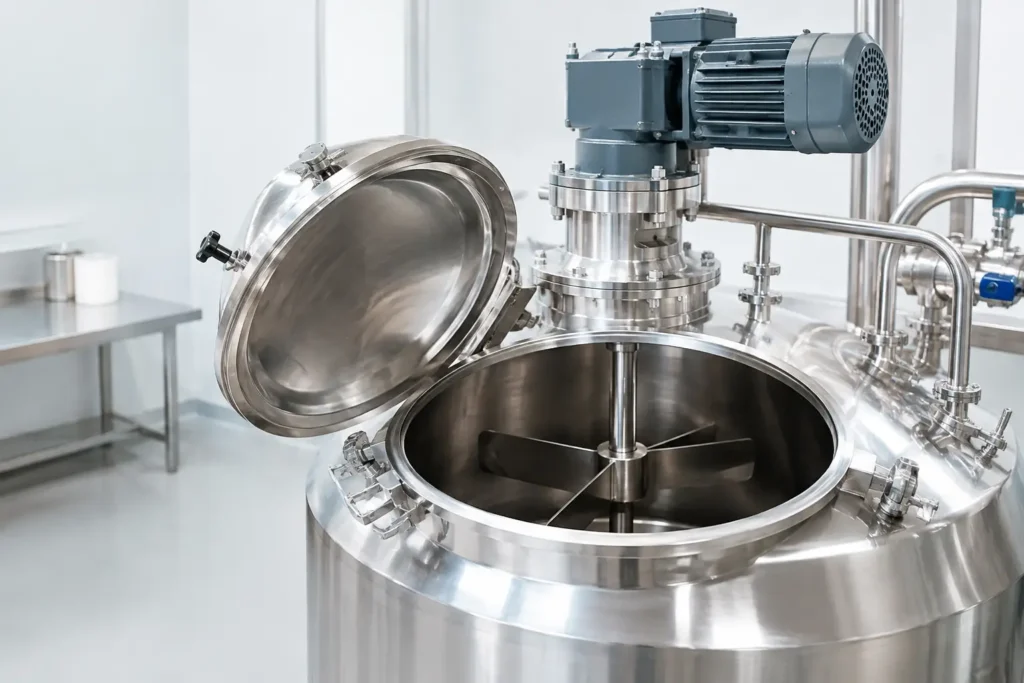
Tank Mixers

Sanitary Mixing Equipment for Clean Processing

A mixer can hit the required blend time and still create a sanitation problem. Product retained behind an impeller hub, an undrainable pipe branch, a poorly selected seal, or a rough internal weld can turn a productive batch system into a source of rejected product and extended cleaning cycles. Sanitary mixing equipment must therefore do

Sanitary Mixing Equipment for Clean Processing Read More »
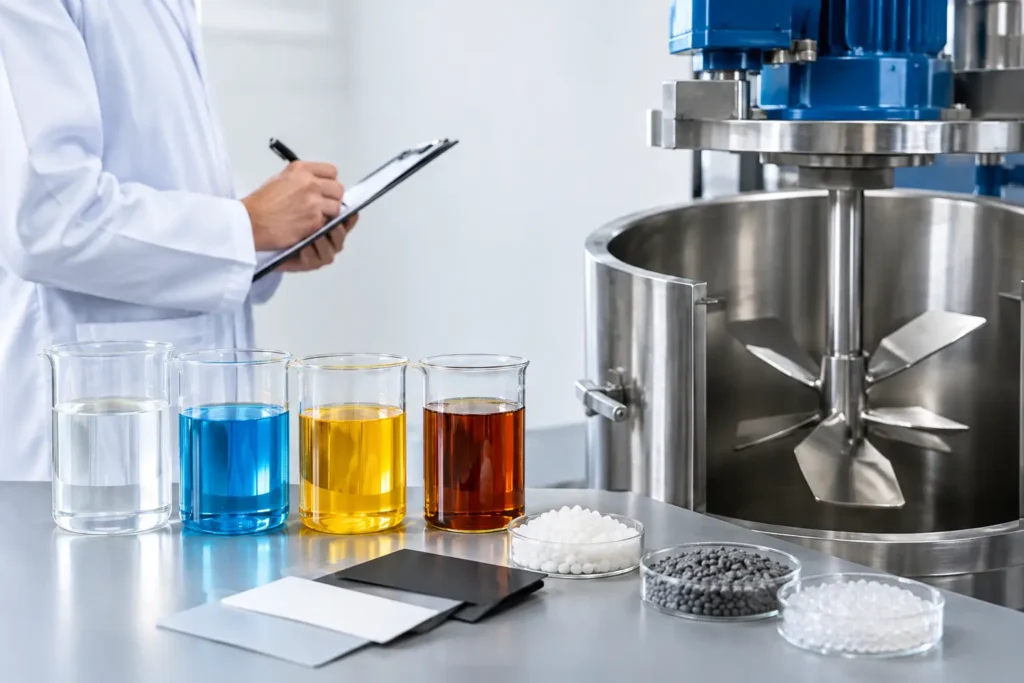
Chemical Compatibility Selection Guide for Mixers

A chemical attack rarely begins with a dramatic equipment failure. More often, it starts as discoloration around a threaded connection, a softened gasket, pitting near an injection point, or a seal that no longer holds pressure. A sound chemical compatibility selection guide helps prevent those small warnings from becoming leaks, unplanned downtime, contaminated product, or

Chemical Compatibility Selection Guide for Mixers Read More »

How to Calculate Mixer Power for Industrial Tanks

A tank mixer that looks adequately sized on a layout can still fail in service if its motor cannot overcome viscosity, startup load, gas dispersion demands, or changing batch conditions. Knowing how to calculate mixer power gives engineers a defensible starting point for selecting an impeller, gearbox, shaft, seal, and motor package that will perform

How to Calculate Mixer Power for Industrial Tanks Read More »

How to Prevent Tank Vortexing in Mixing Systems

A deep surface funnel in an agitated vessel may look like evidence of vigorous mixing. In many industrial processes, it is evidence that too much mixer energy is being converted into liquid rotation instead of useful bulk circulation. Knowing how to prevent tank vortexing protects batch consistency, reduces air entrainment, and helps the mixer deliver

How to Prevent Tank Vortexing in Mixing Systems Read More »

Poor Blending Causes in Industrial Processes

A batch can look uniform at the tank surface and still fail quality testing hours later. Concentration gradients, undispersed additives, separated phases, and inconsistent viscosity often point to the same root problem: poor blending causes are usually process-design issues, not simply a lack of mixer horsepower. For plant teams, the practical question is not whether

Poor Blending Causes in Industrial Processes Read More »